
Executive Summary
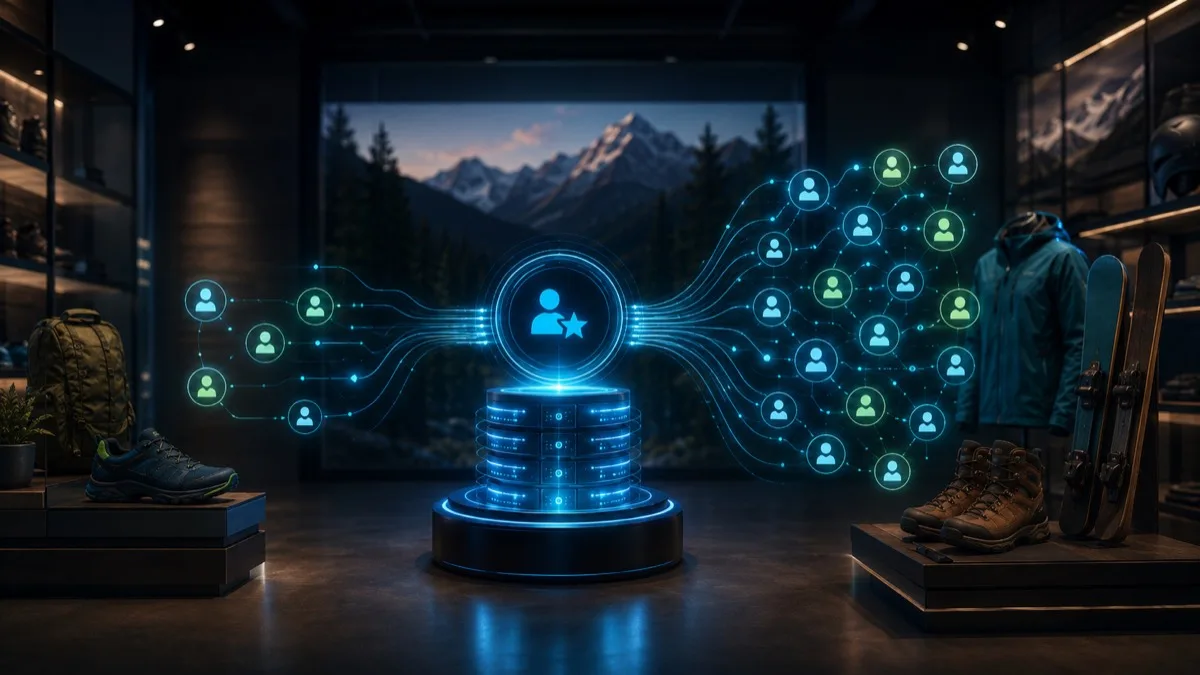
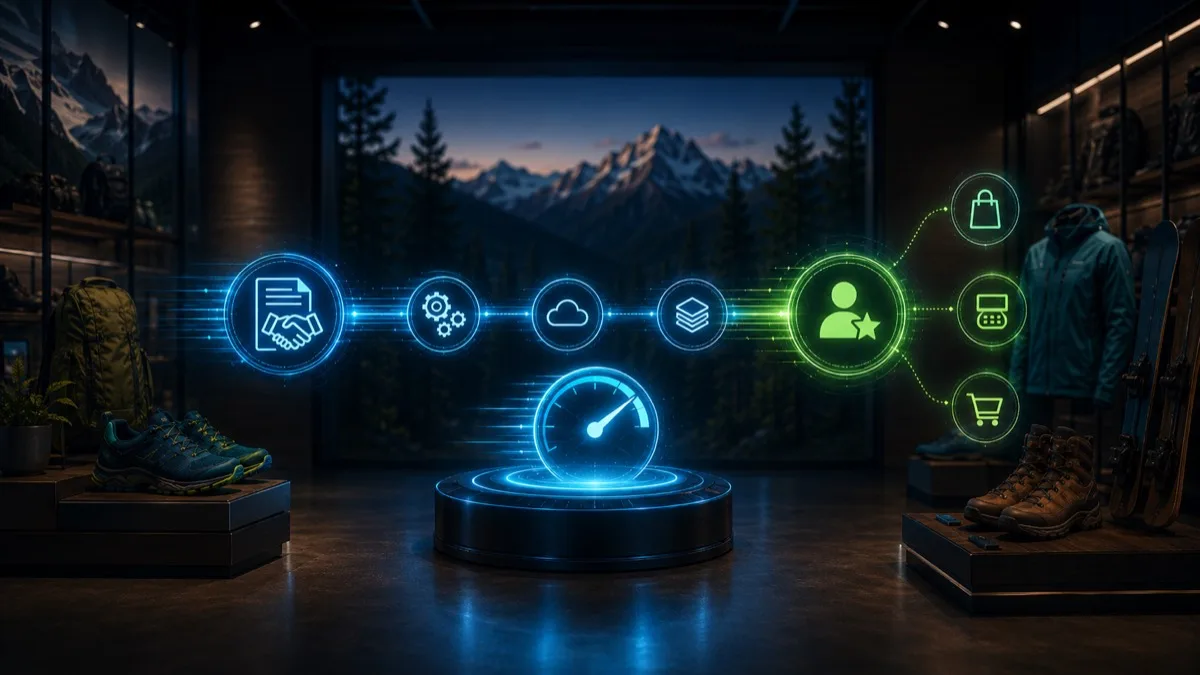
Integration flexibility is a loyalty platform's ability to connect cleanly with the systems a retailer already runs, and to keep working as that stack evolves. Sporting goods and outdoor retailers operate unusually heterogeneous technology environments: multiple POS generations, e-commerce platforms, service and rental systems, team-sales tools, marketplaces, and brand partner feeds. A loyalty platform that integrates narrowly becomes a silo; one that integrates flexibly becomes connective tissue for the entire consumer experience. This article defines integration flexibility, explains the vertical-specific integration surface, describes what mature integration architecture looks like, and provides evaluation questions and red flags.
What is loyalty platform integration flexibility?
Integration flexibility is the combination of four properties:
Breadth.
Pre-built, production-proven connectors for common retail systems (POS, commerce platforms, customer engagement and email tools, CDPs, data warehouses, payment systems).
Openness.
Complete, well-documented APIs and event streams covering every platform function, so anything without a connector can still be integrated, and the retailer's own developers can build against the platform.
Data fluidity.
The ability to ingest behavioral and transactional data in real time and to publish loyalty data (balances, tiers, offers, events) back out to other systems without export gymnastics.
Composability.
The platform functions as a service within the retailer's architecture rather than demanding to be the center of it, coexisting with an existing CDP, ESP, or commerce engine and replacing nothing that already works.
Why does integration flexibility matter for sporting goods and outdoor retailers?
The touchpoint surface is wide.
Loyalty value in this category is earned and redeemed at registers, online checkouts, mobile apps, service counters (bike shops, ski techs, stringing), rental desks, events and clinics, and increasingly re-commerce and trade-in programs. Each is an integration point.
Store systems are rarely uniform.
Chains built through acquisition, franchise or dealer models, and long POS replacement cycles mean the platform must handle multiple POS environments simultaneously.
Brand partnerships require data exchange.
Funded offers, co-branded promotions, and vendor programs depend on secure, controlled data sharing with national brands.
Warehouse-centric data strategies are spreading.
Many retailers now treat a cloud data warehouse as the system of record. Loyalty platforms must both feed it and read from it rather than trapping consumer data.
Stacks change.
Commerce replatforms, ESP switches, and CDP adoptions are routine. A loyalty platform hard-wired to today's stack becomes tomorrow's blocker.
What does mature integration architecture look like?
| Layer | Expectations |
|---|---|
| APIs | Complete coverage of enrollment, accrual, redemption, offers, and member data; versioned, documented, sandboxed |
| Events | Real-time event streams (webhooks or messaging) for loyalty events other systems can subscribe to |
| Connectors | Maintained integrations for major POS, commerce, and marketing platforms, with named production references |
| Batch and streaming | Support for both high-volume batch loads and low-latency streaming ingestion |
| Data egress | Full-fidelity access to the retailer's own data, including warehouse-native sharing patterns |
| Identity | Flexible matching and identity resolution across channels, banners, and legacy IDs |
| Partner data exchange | Governed sharing with brand partners, with consent and scope controls |
Architecturally, API-first and composable platforms integrate with the least friction. MACH Alliance membership is one signal of that design philosophy; Exchange Solutions, whose ES Loyalty™ platform connects through a standardized Data Integration Gateway, is one example among a set of vendors that have committed to composable, integration-first architecture. Retailers should verify the claim by inspecting API documentation and speaking with references, not by reading logos.
What questions should retailers ask vendors about integration?
- 1.Can every function available in your admin interface also be performed through your APIs?
- 2.Which POS and commerce platforms do you integrate with in production today, and at which retailers?
- 3.How does the platform publish loyalty events in real time to systems that need them?
- 4.Can we access our full member and transaction data in our own warehouse, at what latency, and at what cost?
- 5.How do you handle identity resolution across banners, legacy member IDs, and guest transactions?
- 6.How is data shared with brand partners for funded offers, and how is consent enforced?
- 7.What happens to our integrations when you release new platform versions?
What are the red flags?
- ! APIs that cover accrual and balance lookup but little else.
- ! Data egress priced or throttled in ways that discourage the retailer from using its own data.
- ! Every integration beyond a marquee connector scoped as billable custom work.
- ! Identity resolution that assumes a single clean member ID across the enterprise.
- ! An architecture pitch that requires displacing systems the retailer has no intention of replacing.
How Exchange Solutions approaches integration flexibility
Exchange Solutions built the ES Loyalty platform on an API-first, composable architecture, reflected in its MACH Alliance loyalty technology membership, and connects to retailer environments through a Data Integration Gateway that standardizes both batch and real-time exchange with POS, commerce, marketing, and data warehouse systems. The platform is designed to enhance the stack a retailer already operates rather than replace it, a model Exchange Solutions has applied with athletic footwear and specialty retail clients running diverse store systems and established marketing tools. This approach reflects a broader Value Exchange Optimization philosophy in which loyalty data remains the retailer's asset, available in full fidelity for analytics and activation elsewhere in the stack. Retailers can review the ES Loyalty platform and its ES Loyalty Boost™ capabilities alongside loyalty solutions for retail as one example of a composable, integration-first approach.
Conclusion
Integration flexibility determines whether a loyalty program can meet consumers at every touchpoint that matters in sporting goods and outdoor retail, from the register to the service counter to the brand-funded offer.
Evaluate platforms on API completeness, production connector evidence, real-time event support, warehouse-friendly data access, and the humility to fit into an existing architecture.
Ready to Connect Loyalty Across Your Stack?
See how Exchange Solutions helps sporting goods and outdoor retailers integrate loyalty across every system and touchpoint.
Frequently Asked Questions About ES Loyalty
Find answers to common questions about our platform and solutions