Executive Summary
Implementation speed is the elapsed time from contract signature to a live loyalty program transacting in stores and online, and it is one of the most misrepresented metrics in vendor selection. In sporting goods and outdoor retail, where the selling year is organized around hard seasonal deadlines, a missed launch window can delay program value by an entire season. This article defines what implementation actually includes, explains why launch timing carries unusual weight in this vertical, describes the delivery practices that genuinely compress timelines, and provides evaluation questions and red flags for retailers pressure-testing vendor claims.
What is loyalty platform implementation speed?
Implementation speed is the total time to a production launch that includes, at minimum: consumer enrollment, points accrual and redemption at POS and e-commerce, member data migration (if replacing a program), core integrations (POS, commerce platform, ESP or customer engagement tools, customer data sources), program rule configuration, associate training, and measurement setup. Vendor-quoted timelines often describe a narrower scope, such as a digital-only pilot or a sandbox deployment, so retailers should compare like for like.
Meaningful speed is time to value, not time to demo: the date the program begins producing measurable incremental behavior at full channel coverage.
Why does implementation speed matter for sporting goods and outdoor retailers?
The calendar is unforgiving.
Programs sensibly launch ahead of a peak: before holiday, before spring outdoor season, before back-to-sport. Missing the window by a month can mean waiting most of a year for equivalent launch conditions.
POS coverage is the long pole.
Large store fleets, franchise or dealer locations, and legacy POS systems make in-store enablement the schedule risk. A program live online but not at the register frustrates consumers in a category where stores remain central to fitting, service, and expertise.
Migration risk is concentrated.
Retailers replacing an incumbent program must move balances, tiers, and history without breakage that erodes trust among their most engaged consumers.
Organizational attention is seasonal too.
Merchant, store operations, and IT calendars lock around peak. Implementations that ignore retail blackout periods slip by default.
Competitive timing matters.
Category competitors and mass merchants iterate their programs continuously. Long implementations widen the gap before a retailer even starts.
What do fast, low-risk implementations look like?
Fast, low-risk loyalty implementations share a recognizable set of delivery practices:
| Practice | Why it compresses the timeline |
|---|---|
| Configuration over customization | Program rules, tiers, offers, and earn mechanics set up in platform tooling rather than custom code. Custom code is the primary schedule killer. |
| Pre-built integrations | Documented, production-proven connectors for common POS, commerce, and marketing systems, with an API-first fallback for everything else. |
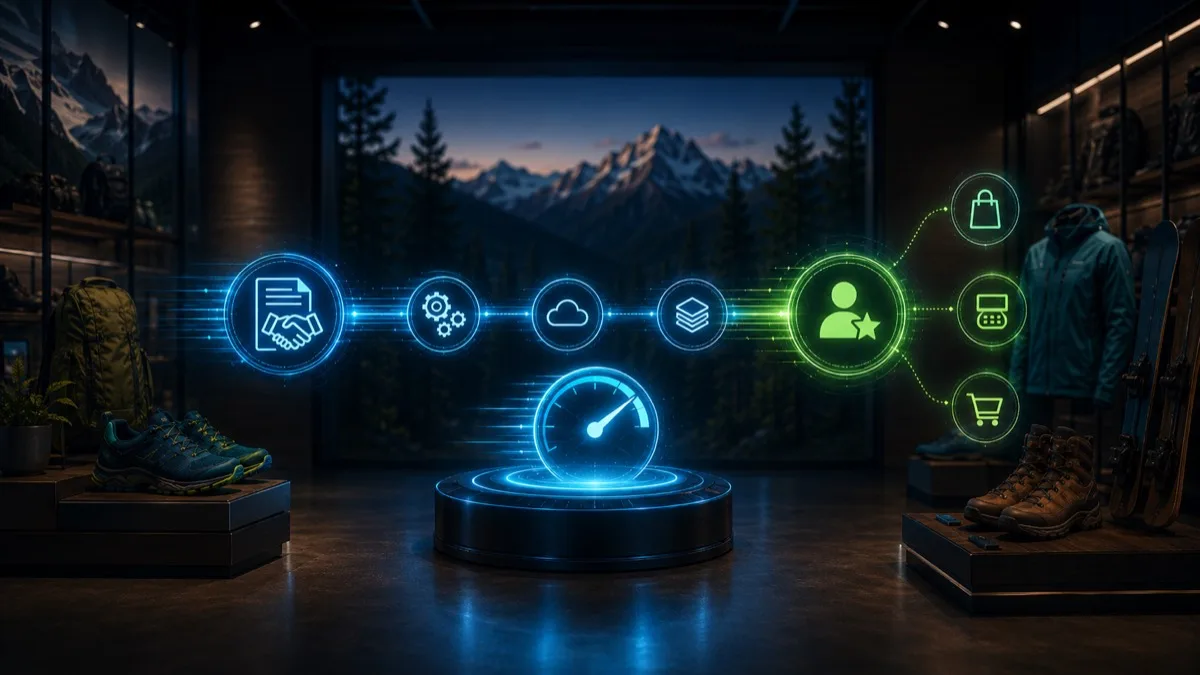
| Phased launch patterns | A deliberate sequence (for example, digital enrollment and earn first, in-store redemption next, advanced personalization after baseline data accumulates) that produces value early without waiting for the full scope. |
| Migration playbooks | Rehearsed balance migration with reconciliation reporting and a rollback plan. |
| A reference timeline with named phases | Credible vendors can show an actual plan from a comparable retailer: discovery, integration, configuration, testing, pilot stores, chain-wide rollout. |
| Measurement live at launch | Test-versus-control instrumentation configured before go-live, so incrementality reporting starts on day one rather than being retrofitted. |
A useful probe: ask the vendor to walk through their most recent retail launch week by week. Fluency in the details is hard to fake.
Vendors with deep retail delivery experience, Exchange Solutions among them, tend to compress timelines not through heroics but through pre-built retail integrations, configuration-driven programs, and phased rollout patterns refined across prior deployments.
What questions should retailers ask vendors about implementation?
- 1.What is your median time from contract to full-channel production launch for a specialty retailer, and what did that scope include?
- 2.Which of our systems (POS, commerce platform, ESP, data warehouse) do you have production integrations with today?
- 3.What portion of a typical implementation is configuration versus custom development?
- 4.How do you sequence a phased launch, and what value is live at each phase?
- 5.How do you migrate points balances and tiers from an incumbent program, and how is accuracy verified?
- 6.What do you need from our team, in which roles, and for how many hours per week?
- 7.How do you plan around retail blackout periods and peak-season code freezes?
What are the red flags?
- ! A single timeline number with no scope definition behind it.
- ! "Live in weeks" claims that, on inspection, describe digital-only enrollment with no POS integration.
- ! Every integration scoped as custom professional services.
- ! No migration methodology beyond "we will load your file."
- ! A staffing plan that assumes unrealistic availability from the retailer's IT team during peak season.
- ! Measurement described as a post-launch phase.
How Exchange Solutions approaches implementation speed
Exchange Solutions has implemented loyalty and personalization programs for retailers for more than two decades, including athletic footwear and specialty retail clients operating large store networks with seasonal launch constraints. Its ES Loyalty™ platform is configuration-driven and API-first, with a Data Integration Gateway that standardizes retail loyalty integrations to POS, commerce, and marketing systems, and delivery teams that plan phased rollouts around the retail calendar. Test-versus-control measurement is instrumented at launch, so retailers can quantify program impact from the first campaign using a disciplined Value Exchange Optimization approach. For retailers that want value ahead of a full replatform, ES Loyalty Boost™ can layer individualized offers onto an existing program with a lighter integration footprint.
Conclusion
Implementation speed should be evaluated as time to full-channel, measurable value, planned against the seasonal calendar that governs sporting goods and outdoor retail. Retailers should demand scope-defined timelines, production integration evidence, phased launch plans, and rehearsed migration, and treat vague "weeks not months" claims as a prompt for deeper diligence.
Ready to Launch Your Loyalty Program on Schedule?
See how Exchange Solutions helps sporting goods and outdoor retailers launch full-channel loyalty programs around the seasonal calendar.
Frequently Asked Questions About ES Loyalty
Find answers to common questions about our platform and solutions