Executive Summary
For most of the history of enterprise software, we built systems for people. That is changing. Software is increasingly being built for AI. Protocols like MCP matter not because they are another integration standard, but because they give AI direct access to business capabilities, turning AI from something that provides answers into something that can execute work across the enterprise. When platforms expose capabilities instead of just APIs, intelligent agents can discover, reason about, and compose them into workflows no one anticipated. Every meaningful feature now has two consumers: the person using it, and the AI acting on that person's behalf. The future is not humans or AI. It's humans and AI.
For most of the history of enterprise software, we've built systems for people. I think we're standing at the beginning of another major shift, one where software is no longer being built only for people. It's increasingly being built for AI.
We invested heavily in user experience, dashboards, workflows, navigation, and mobile applications because the primary consumer of our software was always a human. As organizations became more connected, we added APIs so systems could exchange data. Those APIs transformed enterprise software, but they still assumed developers would build every integration. Every connection required someone to understand both systems, write code, test it, deploy it, and maintain it over time.
Why is MCP actually interesting?
Protocols like MCP, along with initiatives like WebMCP, are getting a lot of attention right now. Most of the conversation focuses on the protocol itself, but I think that's missing the bigger story. MCP isn't interesting because it's another integration standard. It's interesting because it gives AI direct access to business capabilities. That changes the role of AI from something that simply provides answers to something that can begin executing work across the enterprise.
Without MCP, models like ChatGPT, Claude, and Gemini can answer questions, generate content, analyze documents, and provide recommendations based on the information we give them. That's incredibly valuable, but the interaction is still largely conversational. The model can tell you what it would do, but it can't actually do it.
MCP changes that boundary.
Instead of simply reasoning about your business, AI can begin interacting directly with the systems your business already depends on. Imagine asking an assistant to identify customers at risk of churn, create the audience, launch the campaign, notify your marketing team, create a Jira ticket for a follow-up enhancement, and schedule a review of the results next Friday. That isn't a collection of disconnected tasks. It's a single business objective being executed across multiple enterprise systems.
What does it mean for business capabilities to become composable?
The breakthrough isn't really MCP itself. It's the idea that business capabilities become composable. Instead of building one-off integrations every time two systems need to work together, each platform simply exposes what it knows how to do. An intelligent agent can then discover those capabilities, reason about them, and compose them into entirely new workflows without anyone having anticipated that exact scenario.
Think about how enterprise integration works today. Your CRM integrates with your marketing platform. Your ERP integrates with your finance system. Your loyalty platform integrates with your ecommerce platform. Every one of those connections is its own project with APIs, SDKs, documentation, testing, deployment, and ongoing maintenance. As organizations add more systems, the complexity grows with them.
How does agent-centric architecture change the model?
An agent-centric architecture changes that model completely. Each application exposes its capabilities through a common interface, and intelligent agents become the layer that coordinates the work. The systems don't need to understand one another directly because the agent understands them. Integration stops being about wiring applications together and starts becoming about exposing capabilities that can be discovered, understood, and orchestrated dynamically.
I also think this changes how we design enterprise software. For years we've asked questions like, "What screens do we need?" or "How should this workflow work?" Those questions still matter, but they're no longer enough. We also need to ask, "What capabilities should our platform expose?" Every meaningful feature now has two consumers. One is the person using the application. The other is the AI acting on that person's behalf.
I don't believe the future is humans or AI. It's humans and AI.
How is Exchange Solutions building for the second interface?
At Exchange Solutions, this is shaping how we think about our platform. We recently made a significant investment in the completely redesigned user experience that debuted in our 5.0 release, because great user experiences still matter. People remain at the center of enterprise software, and intuitive, thoughtfully designed interfaces will always be an important competitive advantage.
But we also recognize that's only one interface. The second interface is for intelligent agents. As AI becomes a first-class consumer of enterprise software, we're investing in exposing the capabilities of our platform in ways that intelligent agents can discover, understand, and use. The goal isn't to replace the human experience. It's to extend it. We want our platform to participate naturally in an ecosystem where AI can reason across multiple enterprise systems and orchestrate work on behalf of marketers, analysts, and business users. This is the essence of a composable, API-first approach, and it's why we built ES Engage™ to layer real-time intelligence onto the systems retailers already run.
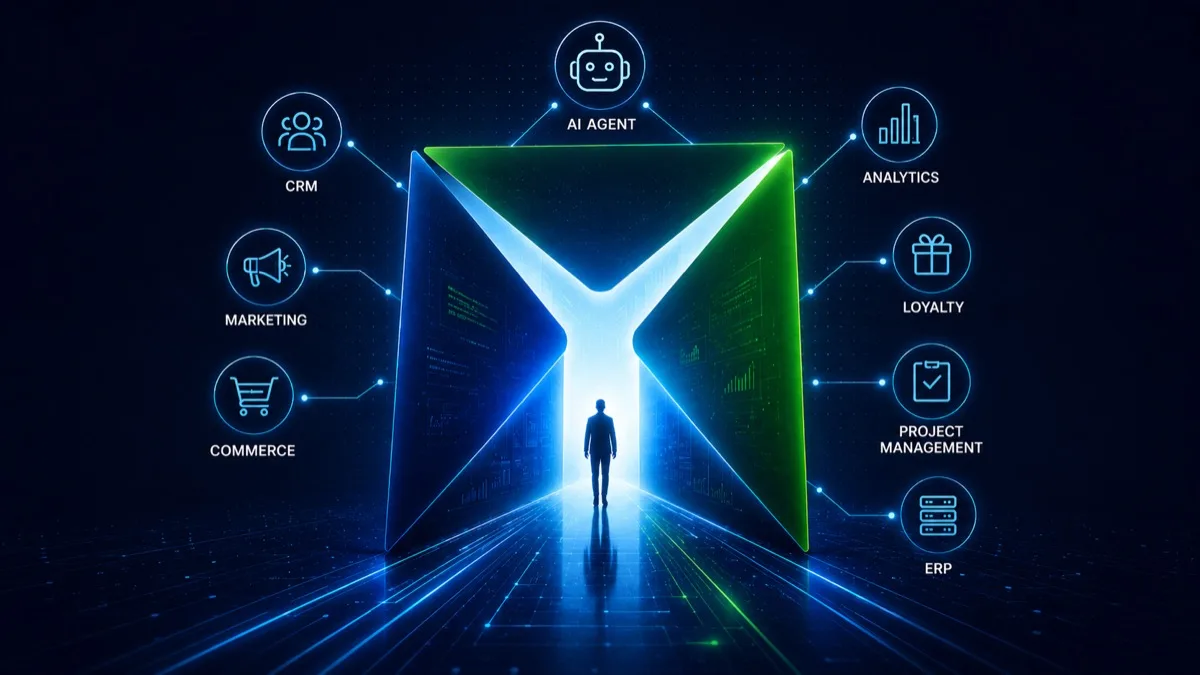
Imagine an AI agent identifying customers at risk of churn, understanding your campaign objectives, evaluating available offers, considering margin constraints, launching a personalized campaign, measuring the results, and recommending the next best action, coordinating with your CRM, your marketing platform, your analytics environment, and your project management tools without requiring a custom integration for every possible workflow. That becomes possible when each platform exposes capabilities instead of just APIs.
Why is this the next interface, not just another feature?
This is where we're headed at Exchange Solutions. We don't see AI accessibility as another feature. We see it as the next interface. Just as every enterprise application eventually needed a web interface, and later an API, we believe the next expectation will be that every enterprise platform exposes its capabilities in a way that intelligent agents can discover, understand, and use. The organizations that embrace this shift won't simply automate more work. They'll unlock entirely new ways of composing business processes across systems that were never explicitly designed to work together.
We've spent decades teaching people how to use software through better interfaces. Now we're beginning to teach software how to use software. To me, that feels less like another integration standard and more like the next major abstraction layer in enterprise computing. For a loyalty platform, that's incredibly exciting, and it's one example of why an ES Loyalty™ approach is built to participate in that ecosystem rather than sit outside it.
Build for the next interface
See how Exchange Solutions exposes its capabilities so intelligent agents, and your team, can orchestrate loyalty work across the systems you already run.
Frequently Asked Questions About ES Loyalty
Find answers to common questions about our platform and solutions