Executive Summary
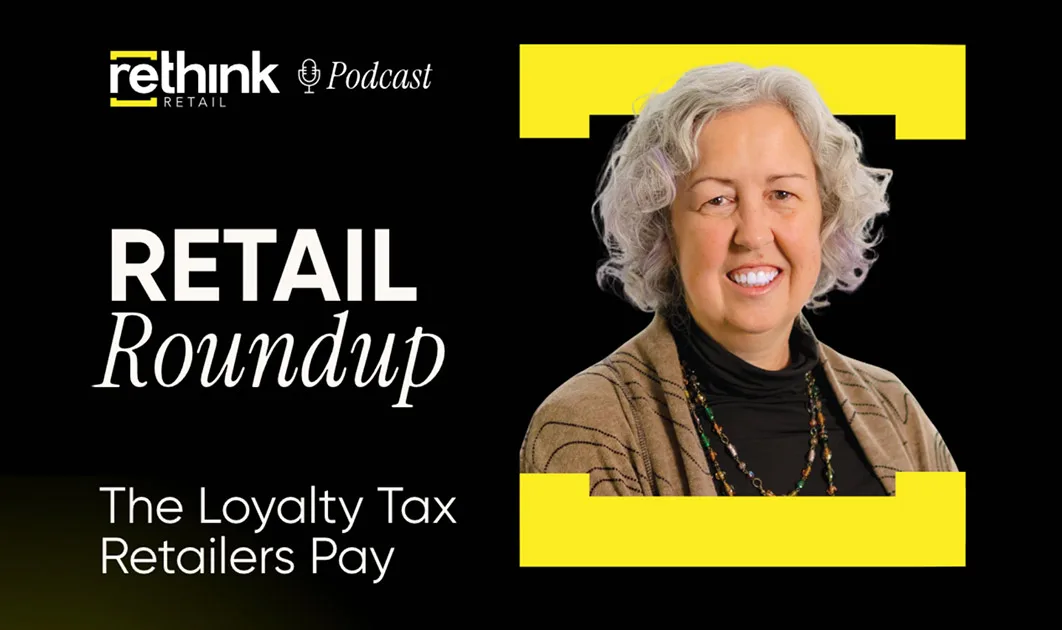
Most loyalty programs quietly pay a "loyalty tax," margin spent on purchases that would have happened anyway, while conditioning shoppers to wait for the next deal. In this RETHINK Retail conversation, Brenda Higuchi of Exchange Solutions™ argues that the standard scorecard, redemption and open rates, rewards generosity rather than behavior change, and that the question CFOs should be asking is simple: what would have happened if we had done nothing? The fix is incrementality discipline, test-and-control holdouts, measuring incremental margin and cost per incremental dollar of margin, and AI that exercises restraint, spending on customers who need a nudge, recognizing loyal "sure things" with access instead of discounts, and leaving do-not-disturbs alone. With one pharmacy retailer, AI-driven offer decisioning doubled completion rates and cut offer costs by a third. As agentic commerce grows, she warns, always-on discounting trains AI shopping agents to wait for the markdown, making machine-readable, identity-based value the smarter long game.
Key Themes from the Conversation
The loyalty tax is a margin leak
Points became a deferred discount and tiers a thank-you for past spend. Much loyalty budget rewards best customers who would have bought anyway, rather than the shoppers who actually need a nudge, a blind spot documented as far back as a 1997 study of Australia's Flybys program.
Standard metrics measure generosity, not lift
Hand out $20 bills on the street and redemption hits 100%. Real measurement means promotional lift against holdout groups, incremental margin over incremental sales, and cost per incremental dollar of margin, plus watching the growing share of promotion-only "cherry pickers."
AI's best move is sometimes no offer
Margin-driven AI sorts customers into those who buy only when nudged, "sure things" who want recognition not discounts, lost causes, and do-not-disturbs. A home-improvement retailer cleared overstock mattresses with targeted offers instead of a blanket clearance markdown, protecting margin on likely buyers.
Agentic commerce punishes always-on discounting
AI shopping agents remember promotional history. A brand that is always on sale teaches agents to wait for the markdown. Making value machine-readable, member pricing, benefits, and service guarantees tied to identity, keeps loyal customers' value recognized without training agents to hold out.
Proof point: more for less
After moving a pharmacy retailer to AI-driven offer decisioning focused on incremental opportunities, completion rates doubled and offer costs fell by a third, concrete evidence that disciplined, margin-aware targeting can outperform the old spend-more playbook.
Full Transcript
Read the full episode transcript
Host (Jeremy Goldman): And we're back. Super excited to jump into this next segment. We are going to be exploring how advanced analytics and AI are driving the future of customer engagement with Brenda Higuchi from Exchange Solutions, a cloud-based loyalty program with over 25 years of experience, turning standard promotional programs into high-margin, profitable growth engines for industry leaders like Foot Locker, McKesson, and Esso. So joining us is the aforementioned Brenda. She leads Exchange Solutions' journey into cutting-edge analytics and machine learning, bringing deep expertise in data strategy and consultative leadership. Brenda and her team design, build, and operate smart, fully integrated technology that powers personalized offers and next-generation loyalty experiences. So welcome to the show, Brenda.
Brenda Higuchi: Hi, Jeremy. I'm happy to be here, and thanks for having me.
Host: Yeah, great to talk. I wanted to first start out by talking about one of my favorite topics, which is the loyalty tax. So maybe you could explain to people what is the loyalty tax, and why are traditional retail loyalty programs failing to drive incremental customer behavior often?
Brenda: Sure. The loyalty tax is, we consider it the margin retailers are paying on purchases that were going to happen anyways. They're also potentially training customers to wait in the long term for the deal. So this is over the course of the last couple of decades, where loyalty has really run on the idea of rewarding who buys the most and discounting whoever hesitates. And over time, what's happened is the points have really become a deferred discount. Tiers become a thank you for past spend, but you're really only rewarding customers for what's already happened. You know, loyalty is great. Certainly with the advent of personalization, that's not what we're talking about here. It's really that lack of discipline that nobody's asking, did this change customer behavior? And we're really talking about allocating more of that loyalty spend towards customers and moments where it actually moves behavior. So for example, picture that customer who buys a coffee every Monday morning. Our system sees that pattern and we send her a coupon for her Monday coffee. That's not really incremental. That's not driving a change in behavior. We're just paying her a discount for something she does every week anyways.
Host: Yeah. I mean, it just drives me a little bit crazy. I don't know how this doesn't make your blood boil, but for me it does because every single retailer that I speak to, they're always hyper-focused on protecting margins right now. And then they're doing something that is eroding margins at the same time. When you look closely at loyalty budgets, how much of the spend is actually going to these customers who were going to buy anyway? And is that blind spot common? Because I feel like for a lot of, especially in the non-luxury space, I feel like it is a pretty common blind spot.
Brenda: Yeah, I feel the same. I think it's a pretty universal issue that retailers are facing and probably something they're not really that comfortable talking about. It probably varies widely by program, but we can go back 30 years to an initial study that was done back in 1997 that was looking at the Australian Flybys coalition program. And they were able to demonstrate that very little of the actual loyalty spend generated incremental benefit. So we've known this for a long time. Subsequent studies have certainly confirmed it, and what we're finding is that we're really rewarding our best customers more likely than our ones that do need the nudge. And it's just costing us a lot of money. What we found, for example, is with one of our pharmacy retailer clients, we moved them to more of an AI-driven offer decisioning. And what we saw is with the machine finding those incremental opportunities, completion rates doubled, our offer costs fell by a third. And what this is really just illustrating, and that's just simple like offer selection, is it is possible to get more by spending less versus doing it the old way.
Host: Yeah. And I think obviously it's great that we're talking in October because Amazon had their prime deal days earlier in the month. And to your point, I think now they do that multiple times a year. So they're just training people basically in effect to wait for the sale, which isn't really loyalty, it's just moving sales around, and we talked about this a few weeks ago at our retail roundup that we recorded at Shop Talk Fall. But I wanted to ask you a little bit about the idea about traditional loyalty programs, which I've managed. You know, they'll often have like a few particular metrics that they'll really focus on, like loyalty marketers love to track redemption and open rates, and obviously those numbers don't tell the whole story, right? So why do standard metrics often obscure whether a promo actually changed that customer behavior that we're trying to accomplish?
Brenda: Yeah, you hit on a couple of the metrics that are pretty common to track in a loyalty program. Other things are like attributed loyalty sales and loyalty penetration. And that's all important to understand that your program is effectively engaging your customers. But it's really, again, not looking at the incremental value that's driven there. So, for example, the more generous you are with your rewards, the more likely you're going to have higher open rates, you're going to have higher redemption rates. And it's really just measuring that the giveaway was bigger. For example, if you were just to stand out on the street and hand out $20 bills, you're going to get 100% redemption rate, right? So you really need to look at promotional lift. We need to be looking at things that, making sure we're having our holdout groups. I think everybody understands the concept of test and control, making sure we're focused on incremental margin, not just incremental sales, and importantly, cost per incremental dollar of margin. We're really looking for what we call a sales efficiency there, that we're getting the maximum incremental margin for every dollar we're investing in that promotion. Another important KPI is really tracking the share of members who are buying on promotion consistently over time. One of our clients calls them cherry pickers, right? So we actually have a segment that we track that we call the cherry pickers. And we're really just making sure we're not growing that share of cherry pickers, that people are just waiting for that deal. So, instead of a story here, maybe I'll just ask a question. I'm sure our loyalty stakeholders out there may get mad at me for this, but I'd really love every CFO to be asking the loyalty team, what would have happened if we'd done nothing, as opposed to making all of that investment? If there's really no holdout group, nobody can truly answer how the program's doing, and we're just kind of measuring it on vibes. So it's much more effective to ask ourselves, like, if we had not done that promotion, would anything have changed?
Host: And I love your advice here. Because I think that what I hear the most from people is like, what if you can just use tech to send more offers and maybe make them more personalized, but definitely bigger discounts, like sure, just throw more margin-depleting money at the wall, basically. The approach that you advocate focuses on knowing when to hold back entirely. So what does it look like in practice for AI to exercise strategic restraint rather than simply generating another personalized deal just because we can?
Brenda: That's a very good question. We hear a lot, in our loyalty speak and marketing speak, about finding the next best offer. But what if that next best offer was no offer at all? And that's what AIs can find, especially if it's driven by the margin economics. So if we think about different groups, for example, there's definitely a group in there we want to target that is going to buy when nudged, and they need that incentive to buy. But certainly we've got customers who are going to buy regardless. And key is identifying who they are, and really, they don't need an incentive, they're looking for recognition, special access, a thank you. But we don't need to give discounts to get them to buy. There will be lost causes that aren't going to move either way. So at the end of the day, we're looking for different groups to target. There's always a group that needs the persuading, needs that incentive to buy, and that's who we really need to target. You have your sure things, typically your best customers that are going to buy regardless, and that's really where the AI can help identify these customers. And you don't really need to spend on them, you don't need to give discounts. They're looking for recognition, access, even just a thank you. We don't need to invest in our lost causes because they're not engaged and they're not spending anyways. And particularly if you're in a subscription style business, you're going to have a group of do-not-disturbs. You're just going to want to let those sleeping dogs lie and leave them alone, and take in that money. There's no need to wake them up and disturb them with a cancellation. An example I can give is, one of our clients is a home improvement retailer, think of a Home Depot, a Lowe's, that sort of type of environment. And they had overbought mattresses, so they had some overstock to move. Obviously, the typical move is to mark it down for clearance, but we were able to target offers to customers only who were likely to buy a mattress and maybe be a little bit more generous with a discount, but not as much as a clearance discount. And so we could be very targeted, protect the margin against those that were likely to buy. And then those that needed a nudge, we could be fairly generous with a discount, but then get it out of inventory before we had to move it to clearance.
Host: So that's a really good point. And I wanted to go back to something that you just said a second ago. Slashing prices is usually the easy default, but perks like exclusive access or recognition, they carry a lot of weight. And when does recognition or access beat a price cut? And obviously, we're speaking during the holiday season where people are thinking more about price. But I'm sure that there are a lot of times where you can use something like recognition or access in a proactive way to build your brand instead of diminish it.
Brenda: Yeah, that's usually what your customers who are already loyal value the most. As we talked about before, they don't really need a reason to buy. They just need a reason to feel valued. Certainly, access, priority service, those things you mentioned give a great experience and they cost little in terms of margin. But you're really building a loyalty through an identity, you're not really focused on price sensitivity. In this case, obviously, it works best if you can wrap it around a more experiential type of brand, such as beauty, sporting, travel. Obviously price still wins with our price-sensitive folks, but in this case, we're really talking about recognition of our top customers. And a really common example that I think everybody can identify with is our airline elite members. They actually go on these mileage runs. As we're approaching the end of the year, people will be looking to see if they achieved their segments by the end of the year to retain their status. I personally know somebody who did a 48-hour fly over to Singapore and back just so he could retain his status. So these are not people that are responding to a discount or extra incentive from bonus points, but rather they're really motivated by that status.
Host: Okay. So, I know something that's motivating a lot of e-commerce practitioners to get worried is the idea about agentic commerce, and as it expands, what's going to happen exactly to their business? AI shopping bots, they're already doing things like evaluating brand pricing patterns, and increasingly, like they've been doing that for years, but now it's really done in a more autonomous, agentic fashion. So what long-term impact does constant discounting actually have on how these algorithms perceive and prioritize a brand? Do we know yet?
Brenda: Well, obviously, it's kind of new and the penetration is still low, but we're heading in this direction. I know our organization is looking at agents, and we're looking to see how do we track shopping agents and how do they respond. But it's not hard to deduce that. You've got your promotional calendar. Your customers may not be paying that close of attention unless you're informing them about it. But AI agents remember this. And so if we're always running promotions, if we're always running discounts, our agents are comparing those prices, they learn very quickly that you're a brand that's always on sale, and they're going to wait for that pricing discount before they act. And that AI agent will just learn that over time. What you can do is make your value more machine-readable. And those are the types of things that we're exploring. Maybe there's member pricing tied to your identity or benefits, or service guarantees that you don't have to train these agents to wait for a discount.
Host: Literally, as we were talking, I got another discount. I'm not even kidding. True story. I had to go on do not disturb because it's that time of year and you're right, AI will obviously get a lot better at this. The human is almost good enough at figuring out exactly when certain things are going to happen, or when friends and family is going to occur. Which, by the way, brand? I love you, but you're not my friend or your family, so why does everybody? That's a term we have to get away from, but we'll talk about that another time. But it is interesting also, just like another loaded can of worms, that makes me think about is what's going to happen to the idea of loyalty in general. Are people just gonna pick the best set of pants, khakis let's say, or jewelry? Or basically, does brand loyalty go away?
Brenda: That's an interesting question. I mean, I think, again, as a customer, you're still brand loyal for the most part, at least to certain brands, unless we're talking about commodities. So if I'm shopping for a toaster, I'm going to look for the best price of that toaster at the retailer where I can find it. I may be shopping a particular brand of toaster, but I'm going to be price sensitive to that because I can find that same toaster in multiple locations. But when it comes to apparel, my favorite beauty brands and those types of things, I'm going to be more loyal to those retailers. But what we can talk about is, how does that, we train those shopping agents to recognize that value, and this is where the customer is going to receive that value for continuing to be brand loyal.
Host: Yeah. No, I think that's a really good point. And I think obviously we'll have to see where that takes us. A lot is changing now. Maybe last question. If you could ban one loyalty practice tomorrow, what would it be? I mean, to me, it would be laziness and not thinking about incrementality, but you might have a different idea.
Brenda: I do. I think we've probably all seen from almost all of our loyalty retailers those two-times-the-points events. They happen regularly, they're happening on a monthly basis. I know here in Canada, we have retailers that'll do 20-times-the-points events. And all you're doing is training that customer again to wait for that event. You're going to pull forward those sales and you're going to be giving away way more cost than you need to. And so again, it's just emphasizing our whole theme here, which is, let's focus on that incremental behavior, using those dollars to drive that, as opposed to just training our customers to wait for that sale and wait for that big incentive.
Host: Brenda, thank you so much for joining us today. This was really great.
Brenda: Yeah, thank you for having me. I really enjoyed the discussion. And hopefully we shared something that the listeners will appreciate.
Host: Heading to NRF's Big Show in January, Exchange Solutions will be there. Please stop by booth number 1829 to learn more and say hey. And to our listeners, if you found today's conversation valuable, hit that subscribe button, and join us for the next episode of our Media & Retail podcast. I'm Jeremy Goldman, and we'll catch you next time.
Meet us at NRF 2026, Booth 1829
See how Exchange Solutions helps retailers move loyalty spend toward genuinely incremental behavior and protect margin.
Book a DemoFrequently Asked Questions About ES Loyalty
Find answers to common questions about our platform and solutions