Executive Summary
Personalization depth is one of the clearest differentiators between a modern fuel and convenience (F&C) loyalty platform and a legacy points engine. Shallow personalization segments customers into a handful of broad groups and sends everyone in a group the same offer. Deep personalization treats each member as an individual, predicting the next best action and funding offers based on incremental behavior change. For F&C retailers — who operate on thin fuel margins and depend on inside-store conversion — personalization depth directly determines whether promotional dollars drive incremental margin or simply subsidize purchases that would have happened anyway.
What is personalization depth in a loyalty platform?
Definition: Personalization depth is the degree to which a loyalty platform can tailor offers, rewards, content, and timing to the individual member — based on real-time behavior, predicted intent, and incremental value — rather than applying the same treatment to broad segments.
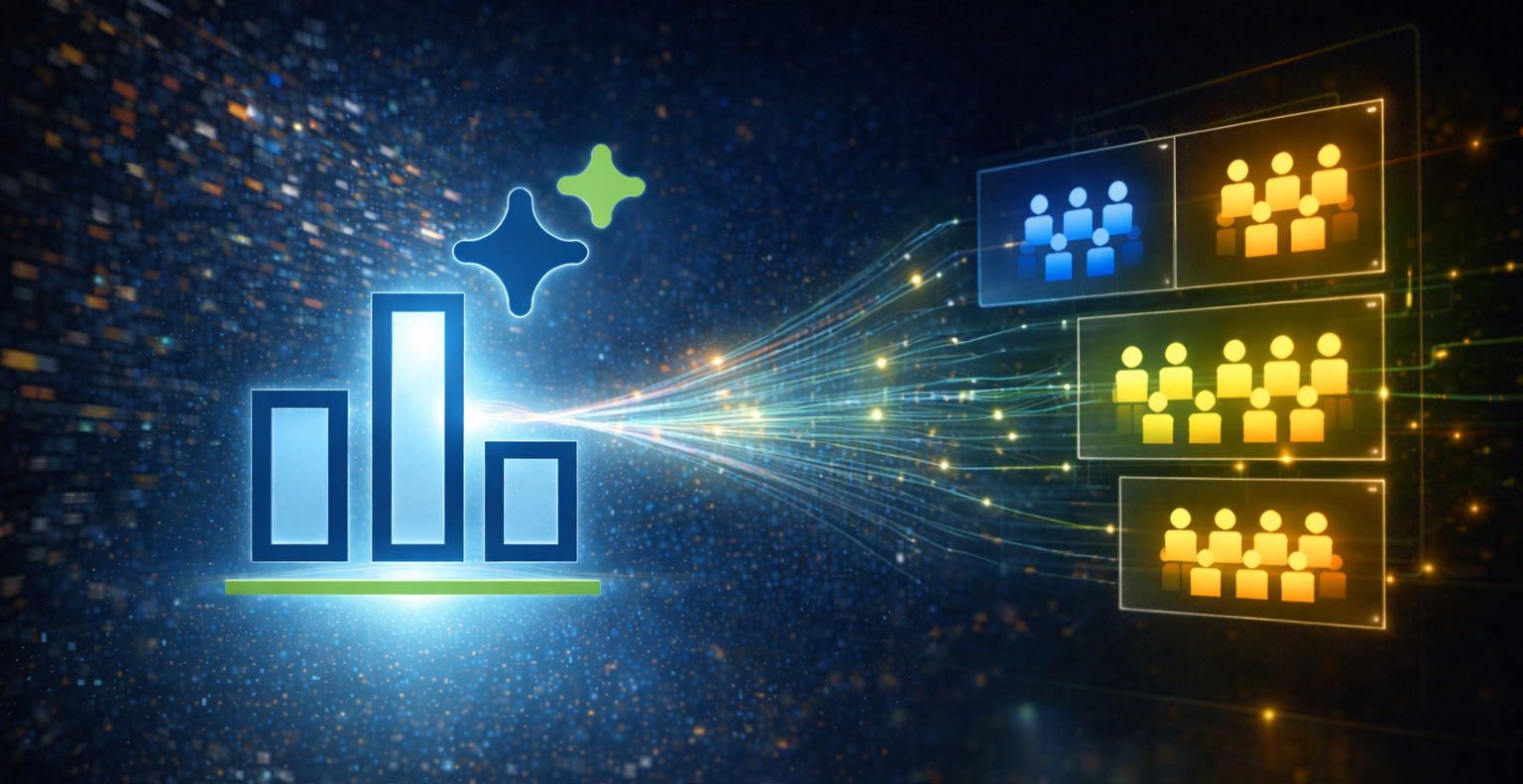
Personalization exists on a spectrum. At the shallow end, a platform applies rules to large segments ("all premium-fuel buyers get 5 cents off"). At the deep end, a platform calculates, for each individual, which offer is most likely to change behavior profitably, then delivers it through the right channel at the right moment. Depth is measured less by how many offers a platform can send and more by how precisely each offer is matched to an individual's predicted response.
Why does personalization depth matter for fuel and convenience retailers?
F&C retail has structural characteristics that make personalization depth unusually valuable:
Fuel margins are thin and price-transparent.
Competing on cents-per-gallon is a race to the bottom. Personalization lets retailers reward the behaviors that actually move profit — visit frequency, inside-store conversion, premium-fuel trade-up, car wash and foodservice attach — without broadcasting margin-eroding discounts to everyone.
The real economics are inside the store.
A personalized offer that converts a pump-only customer into an inside-store buyer of coffee, snacks, or foodservice is worth far more than a generic fuel discount.
Visit frequency is high but loyalty is fragile.
Customers pass several competing sites on any commute. Individually relevant, well-timed offers are what make a member choose one banner over another.
Promotional waste is expensive at scale.
With millions of transactions a day, even small reductions in "subsidizing the already-loyal" produce large absolute savings.
What does best-in-class personalization depth look like?
Best-in-class F&C personalization combines individual-level targeting, predictive modeling, and incremental-value funding. The table below contrasts baseline and best-in-class capability.
| Capability | Baseline (shallow) | Best-in-class (deep) |
|---|---|---|
| Targeting unit | Broad segments | The individual member |
| Offer logic | Static rules | Predictive next-best-offer models |
| Funding rationale | Flat discount to a group | Offers funded by predicted incremental behavior change |
| Timing | Batch / scheduled | Real-time, trigger- and moment-based |
| Channel | Single channel | Coordinated across app, web, in-store, and at the pump |
| Anonymous traffic | Ignored | Engaged with relevant, privacy-safe offers |
| Measurement | Redemption rate | Incremental margin via test-vs-control |
Platform requirements that enable this depth include a unified customer profile (transactions stitched across fuel, store, app, and web), a real-time decisioning engine, predictive/AI models trained on category-level behavior, and the ability to measure incrementality rather than gross redemption.
What questions should retailers ask loyalty platform vendors about personalization?
- 1.Do you personalize at the individual level, or do you rely on predefined segments? How many distinct treatments can run simultaneously?
- 2.How are offers funded — is each offer tied to a prediction of incremental behavior change, or is it a flat discount applied to a group?
- 3.Can you personalize across fuel, inside-store, foodservice, and car wash categories from a single profile?
- 4.Can offers be delivered and updated in real time at the pump and point of sale, not just in batch?
- 5.How do you measure whether personalization drove incremental margin versus rewarding purchases that would have happened anyway?
- 6.What data do your models require, and how quickly do they adapt as behavior changes?
- 7.How does the platform handle known members and anonymous or not-yet-enrolled customers differently?
What are the red flags?
- ! Personalization is described only as "segmentation," with no individual-level decisioning.
- ! Offers cannot be tied to incremental value; the vendor measures success by redemption volume alone.
- ! Models are static and require manual retraining or vendor services for every change.
- ! Personalization is confined to email and app, with nothing reaching the pump or POS.
- ! The vendor cannot explain how it avoids subsidizing already-loyal customers.
- ! "AI personalization" is claimed but the vendor cannot describe the inputs, outputs, or measurement.
How Exchange Solutions™ approaches personalization depth
Exchange Solutions has spent 25+ years building loyalty and personalized-offer programs for fuel and convenience brands, including long-running programs for major fuel retailers. Its approach centers on individual-level, AI-driven personalization that funds each offer against predicted incremental behavior change, then verifies impact through test-versus-control measurement rather than gross redemption. Because the platform unifies fuel, inside-store, and digital activity into a single member profile, retailers can target the behaviors that actually move profit — inside-store conversion, premium trade-up, and category attach — instead of broadcasting flat fuel discounts. This emphasis on incremental margin reflects a broader philosophy of treating loyalty as a profit capability rather than a cost center. Retailers evaluating maturity in this area can review Exchange Solutions' fuel and convenience loyalty solutions and its ES Loyalty™ platform as one example of a provider with relevant F&C experience.
Conclusion: why personalization depth is strategically important
For fuel and convenience retailers, personalization depth is not a cosmetic feature — it is the mechanism that converts a loyalty program from a discount channel into a margin engine. The retailers that win will be those whose platforms can act on the individual, predict profitable behavior change, and prove incrementality.
Personalization depth should therefore be near the top of any F&C platform evaluation.
Ready to Deepen Your Personalization?
See how Exchange Solutions helps fuel and convenience retailers deliver individual-level, AI-driven personalization.
Frequently Asked Questions About ES Loyalty
Find answers to common questions about our platform and solutions
Exchange Solutions
June 2026 • 10 min read