Why the future of luxury e-commerce offers is private, personal, and invisible to the market.
TL;DR
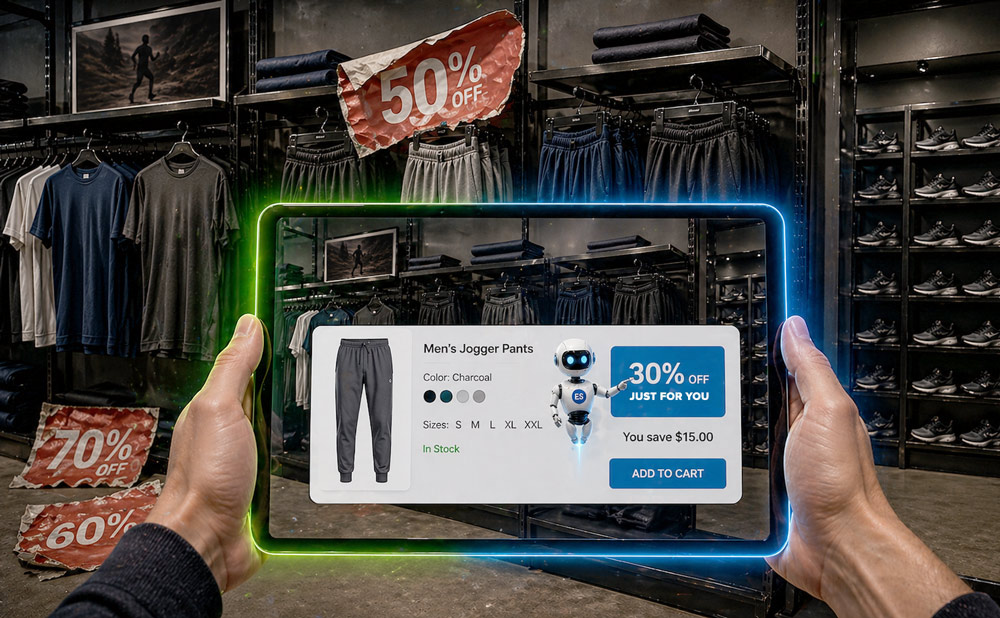
- Luxury brands are right to avoid mass discounting. Public promotions reset reference prices, train customers to wait, and bake a discount into the year-over-year baseline that only another discount can match.
- But avoiding public promotion is not the same as avoiding incentives. Luxury has always delivered targeted value privately — clienteling, VIP access, complimentary services. It just never uses the word "discount."
- The gap is online, where industry analyses consistently put the share of unidentified e-commerce traffic above 90%. Most luxury marketing stacks are built entirely for known customers, leaving the largest share of traffic with no way to be recognized, engaged, or converted.
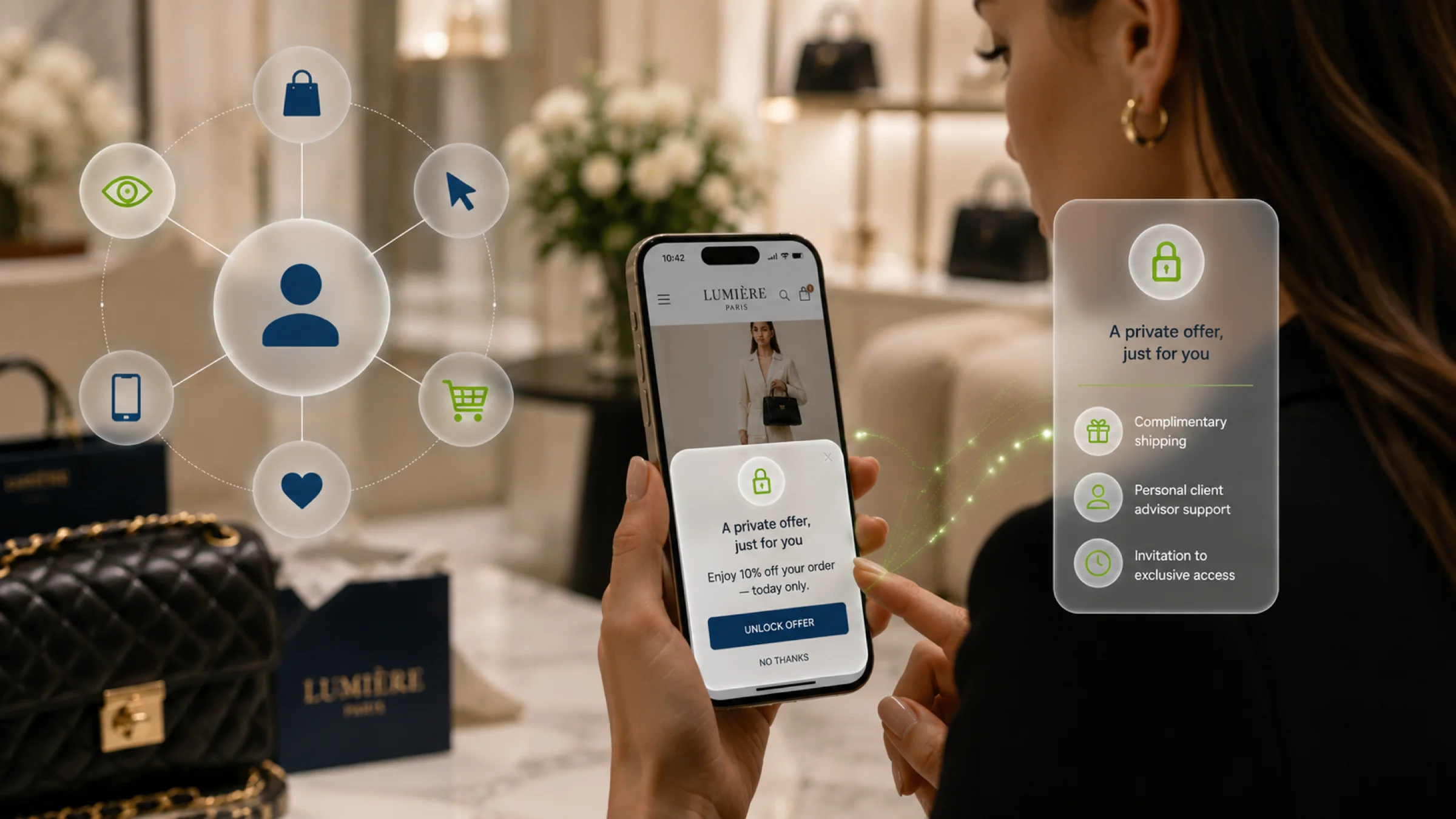
- Real-time, session-level decisioning changes this: a private, individually tailored offer, extended only when a session's behavior shows it won't convert without one, sized to the minimum required, and invisible to the market. Sessions showing high purchase intent receive nothing at all.
- The outcome is a win for both sides. The consumer receives something that feels considered and exclusive. The brand converts an anonymous session into an authenticated purchase — the first step in a relationship. There is no loyalty if the customer doesn't choose you first.
Why are luxury brands cautious about incentives?
Because in luxury, price is part of the product. A visible discount tells every customer that the stated price was never the real price, weakening the scarcity and permanence that justify luxury positioning in the first place. Academic research on price promotion bears this out: in prestige categories, promotions measurably lower perceived quality and psychological value, and the effect is amplified for luxury brands relative to mass-market ones.[2] Predictable markdowns teach even affluent customers to wait. And when a client who paid full price sees the same piece publicly discounted days later, the lesson goes beyond waiting for the next markdown. The purchase itself is devalued, and a moment that should have deepened the relationship instead leaves resentment behind.
There is also a quieter, structural reason finance teams resist promotions: comparable sales. A public promotion drives a lift that gets baked into the baseline, and the only reliable way to comp that period next year is to run the promotion again. The first visible discount quietly commits the brand to repeating it — a self-perpetuating dependency on the P&L. That is why, at many luxury brands, promotional budgets sit under lock and key.
These concerns are legitimate. They argue against broad, visible promotion. They do not argue against private, selective value, which luxury already delivers extensively.
Luxury already personalizes value, privately
Top-client programs, invitation-only access, early entry to constrained product, complimentary alterations and services, a client advisor holding a piece for a specific customer: these are all incentives. They are economically meaningful, they change behavior, and they never touch the public price of the brand. The mechanics differ, but the principles are consistent — selective audiences, private delivery, non-discount framing, and value concentrated on the customers whose behavior justifies it.
Consumers now expect this treatment as a baseline. McKinsey's personalization research found that 71% of consumers expect companies to deliver personalized interactions, 76% get frustrated when it doesn't happen, and personalization done well typically drives a 10–15% revenue lift.[3]
The discipline works. It just has a blind spot.
The blind spot: the anonymous session
Clienteling, CRM offers, and VIP tiers all share one prerequisite: the brand knows who the customer is. Online, that describes a small minority of traffic. Across e-commerce, more than 90% of site visitors typically remain anonymous, and many brands report rates of 97–98%.[1] Social, search, and editorial coverage drive enormous volumes of unauthenticated visitors to luxury sites, and the marketing stack that serves known customers so carefully has nothing for them. Even when an anonymous visitor builds a cart, the odds are against the brand: roughly 70% of e-commerce carts are abandoned.[4]
That is not a promotion problem. It is a conversion problem, and it applies to luxury exactly as it applies to every other retailer: anonymous sessions need to be converted, opportunities to stretch a basket exist only in the moment, and every visit either becomes a relationship or it doesn't.
There is no loyalty if the customer doesn't choose you first.
What does a luxury-appropriate answer look like?
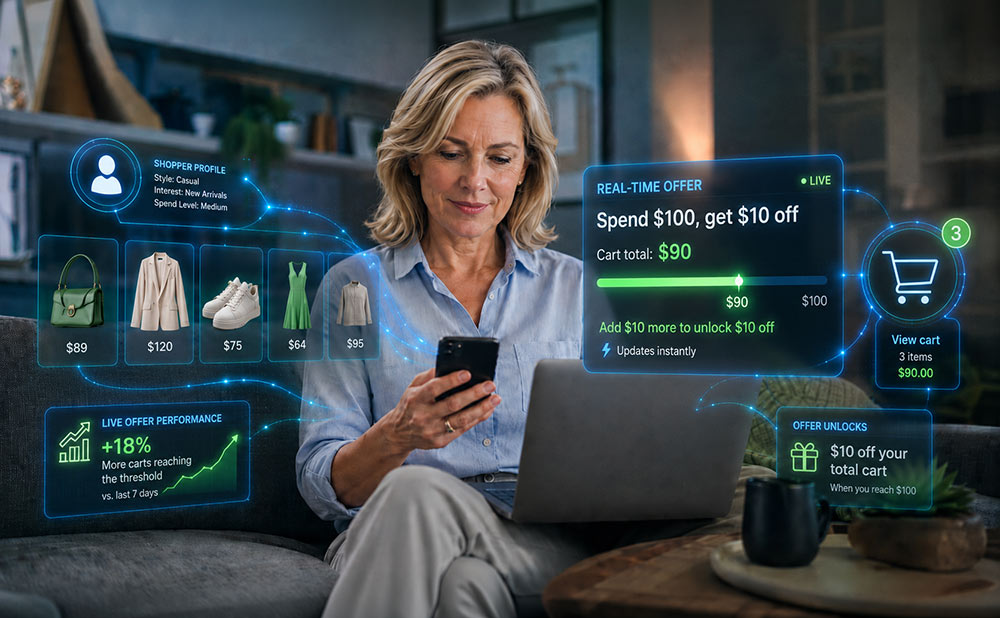
Not a banner, not a code, not a pop-up wheel. A private, one-to-one gesture, made in real time, based on what the session itself reveals: the products being considered, the depth of engagement, the signals that a visitor is about to leave without purchasing.
The defining characteristics:
Selective
Extended only to sessions whose behavior shows they will not convert without one. High-intent visitors — the ones likely to buy anyway — receive nothing. Suppression protects margin better than any promotion ever will.
Private
Individual, unique, non-transferable, and invisible to the market. No public price is touched, no reference price is reset, and no comp baseline is created.
Contextually relevant
The right offer and the right amount for this visitor, this basket, this moment — which is what makes it feel like recognition rather than a markdown.
Minimum effective
The smallest intervention that changes the behavior, whether that is a service gesture, an access privilege, or a modest, capped financial incentive.
Delivered this way, an incentive reads the way clienteling reads: the brand noticed, and responded. The consumer wins something genuinely individual. The brand wins a conversion it would not otherwise have had, and an authenticated customer it can now actually build loyalty with.
Where does this apply in practice?
- Recovering sessions that would otherwise leave. A visitor is engaged but showing hesitation or exit signals. A private, personalized gesture gives them a reason to complete the purchase today, and they identify themselves in the process. Sessions showing strong purchase intent are deliberately left alone.
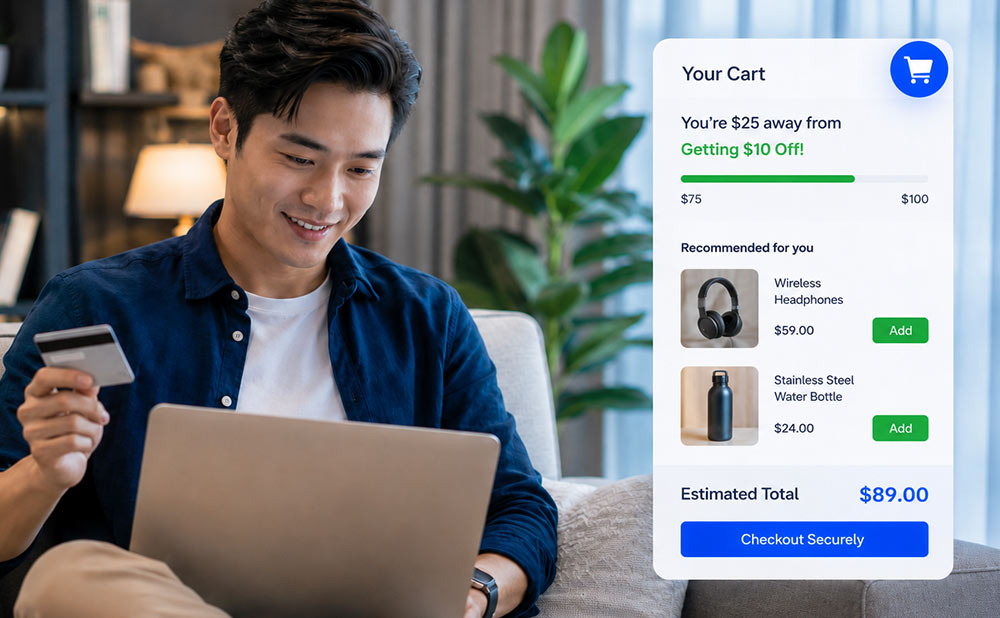
- Real-time basket stretch. A session near a meaningful threshold is invited, individually, to reach it. The stretch happens in the moment or not at all.
- First purchase to second purchase. The most fragile moment in luxury e-commerce. A private, individually timed gesture converts a one-time buyer into a repeat client without ever appearing in a campaign calendar.
- Protecting full-price integrity while still competing. Because every offer is individually decisioned, sized, and capped, average incentive cost stays low and finance retains a fixed, bounded budget — the opposite of an open-ended promotion.
How does ES Engage™ support this?
ES Engage, from Exchange Solutions, is a real-time offer decisioning capability built for exactly this operating model. It works on in-session behavioral data — no login, no PII, no replatforming, deployed through a lightweight tag — and decides at the individual session level whether an incentive is needed at all, and if so, what it should be and what it is worth. High-intent sessions are suppressed and receive no offer. Offers to the rest are private, unique, and capped. Incentive spend is a reallocation of existing promotional budget rather than a new cost, and results are measured on incremental revenue and margin against holdout groups, reported net of platform costs, not on redemption volume. Explore ES Engage and loyalty solutions for apparel and fashion to see the approach in context.
For a luxury brand, that means the great things incentives do — converting anonymous traffic, stretching baskets in real time, making the most of every visit — done the only way luxury can accept: quietly, one customer at a time, with the public brand untouched.
Ready to Convert Anonymous Traffic Without Discounting?
See how Exchange Solutions helps luxury and premium brands extend private, individually decisioned offers that protect full-price integrity.
Frequently Asked Questions About ES Engage
Find answers to common questions about our platform and solutions
Sources
- Opensend, "Website Visitor Identification: 50+ Key Statistics" (2025). opensend.com/post/website-visitor-identification-statistics
- "Price Promotions and Brand Equity: The Case of Luxury Brands." academia.edu/13579980
- McKinsey & Company, "The value of getting personalization right, or wrong, is multiplying" (Next in Personalization, 2021). mckinsey.com
- Baymard Institute, "Cart Abandonment Rate Statistics" (average of 48+ studies). baymard.com/lists/cart-abandonment-rate