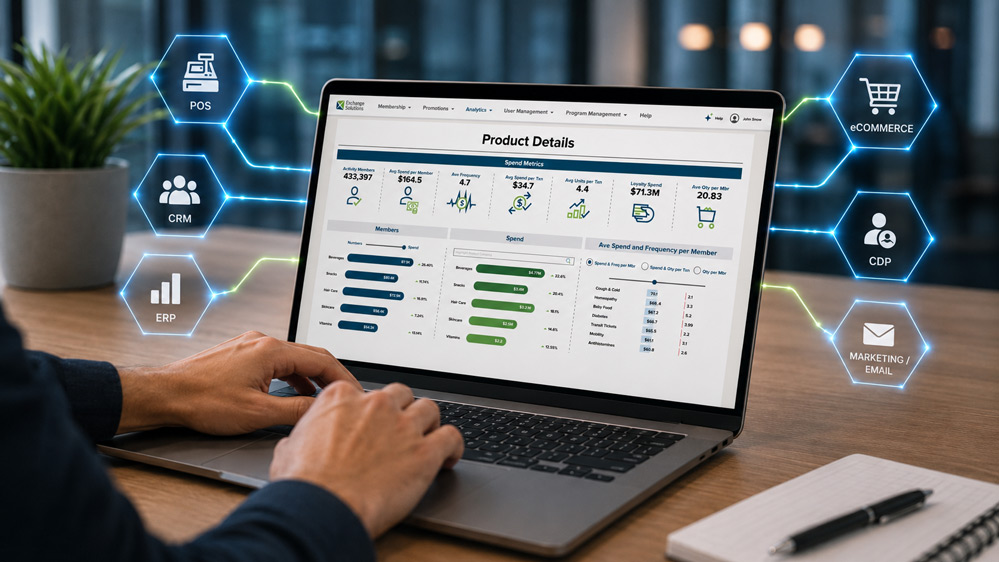


Learn how to overcome data fragmentation and create a true 360° customer view to power personalized loyalty experiences that drive results.
Executive Summary
Data fragmentation continues to hinder loyalty program effectiveness, but unifying customer data across touchpoints creates transformative opportunities. Brands that successfully implement a unified customer view see a 20% increase in marketing ROI and 10% improvement in retention.[1]
Imagine a loyal customer walks into your store. They've been a member of your loyalty program for years, but the associate has no idea about their preferences, past purchases, or recent online browsing history. This disconnect isn't just a missed opportunity—it's increasingly unacceptable to savvy consumers who expect seamless, personalized experiences across every touchpoint.
The High Cost of Data Fragmentation
Data silos are the silent killer of loyalty program effectiveness. When customer information is scattered across point-of-sale systems, e-commerce platforms, mobile apps, and marketing databases, it's impossible to deliver the cohesive, personalized experiences that drive true loyalty. This fragmentation leads to frustrating customer interactions, wasted marketing spend, and ultimately, lost revenue.
The stakes are higher than ever. According to recent research, 71% of customers now expect companies to deliver personalized interactions, but only 29% say brands are meeting those expectations.[2] This gap represents both a challenge and an enormous opportunity for brands willing to tackle their data unification challenges head-on.
The Personalization Imperative
82% of customers are more likely to do business with a company that offers personalized experiences. Data unification is the foundation that makes this level of personalization possible.[3]
Building the 360° Customer View
Creating a unified customer view isn't just about centralizing data—it's about making that data actionable across every touchpoint. The most successful brands are taking a strategic approach:
Key Steps to Data Unification
- Data Mapping: Identify all customer data sources and create a comprehensive data model.
- Identity Resolution: Implement robust matching algorithms to connect data to individual customers.
- Real-Time Integration: Enable streaming data ingestion for up-to-the-moment insights.
- AI-Powered Activation: Leverage machine learning to derive actionable insights and power personalization.
Starbucks provides an excellent example of this approach in action. By unifying transaction data, app interactions, and location information, they've created a loyalty program that feels magical to customers. Their app can predict your usual order as you approach a store, offer personalized rewards based on purchase history, and even adjust recommendations based on the weather.
The Exchange Solutions Advantage
Our data unification platform goes beyond simple data centralization. We leverage AI-powered identity resolution and real-time data streaming to create a living, breathing customer profile that updates instantly across all touchpoints. This enables truly dynamic personalization that adapts to customer behavior in the moment.
Overcoming Integration Challenges
The path to data unification isn't without obstacles. Legacy systems, data quality issues, and the sheer volume of information can make integration seem daunting. However, the most innovative brands are finding ways to overcome these hurdles:
Modular Architecture: Rather than attempting a massive overhaul, leading companies are taking a modular approach. They start by unifying high-impact data sources and gradually expand. This allows for quicker wins and more flexibility as needs evolve.
AI-Assisted Data Cleansing: Machine learning algorithms are being deployed to automate data cleansing and standardization, dramatically reducing the manual effort required to create a unified customer view.
API-First Strategies: By prioritizing API development, brands can more easily connect disparate systems and enable real-time data flow between platforms.
Target's loyalty program transformation serves as an instructive case study. By gradually unifying their online and in-store data, they've created a seamless omnichannel experience that has increased basket sizes by 18% among loyalty members.[4]
Powering Personalization at Scale
A unified customer view is only valuable if you can act on it. The true power of data unification lies in its ability to enable personalized experiences across every touchpoint. This is where AI and machine learning become critical.
By analyzing unified customer data in real-time, AI can:
- Predict the next best action or offer for each individual customer
- Dynamically adjust loyalty program rules and rewards based on customer behavior
- Identify at-risk customers before they churn
- Optimize marketing spend by targeting the right customers through the most effective channels
Sephora's Beauty Insider program exemplifies this approach. By unifying data from in-store purchases, online browsing, and app interactions, they create hyper-personalized product recommendations and tailored rewards that keep customers coming back. This level of personalization has helped Sephora achieve industry-leading customer retention rates.
Navigating Data Privacy and Governance
As brands collect and unify more customer data, responsible stewardship becomes paramount. By 2025, it's estimated that 65% of the world's population will have their personal information covered under modern privacy regulations.[5] This makes a robust data governance strategy essential.
Key considerations include:
Data Governance Essentials
- Consent Management: Implement granular, easily updateable customer consent options.
- Data Minimization: Collect and retain only the data necessary for specific business purposes.
- Access Controls: Ensure only authorized personnel can access sensitive customer information.
- Encryption: Protect data both in transit and at rest using industry-standard encryption methods.
Brands that prioritize data privacy and transparency build trust with their customers. This trust translates directly into increased engagement with loyalty programs and a willingness to share more valuable data over time.
The Path Forward: Unified Data, Unified Experiences
Data unification is no longer a nice-to-have—it's the foundation of modern loyalty programs that drive meaningful business results. Brands that successfully create a 360° customer view and leverage it for personalized experiences are seeing 5-15% increases in revenue and 10-20% improvements in marketing efficiency.[6]
The technology to achieve this level of unification and activation is more accessible than ever. Customer data platforms (CDPs) are rapidly evolving, with 80% of enterprises expected to deploy a CDP by 2025.[7] The question is no longer if you should unify your customer data, but how quickly you can do it to gain a competitive advantage.
As you embark on your data unification journey, remember that the goal isn't just to consolidate information—it's to create seamless, personalized experiences that make your customers feel truly understood and valued. With the right strategy and technology partner, you can transform your loyalty program into a powerful engine for growth and customer satisfaction.