
Executive Summary
The 2025 tariff landscape presents unprecedented challenges for retail businesses, with 67% of consumers already shifting purchasing behaviors in anticipation of price increases. Traditional brand loyalty models are failing as economic pressures force customers to prioritize value over familiarity.
This economic disruption creates both risk and opportunity: retailers who adapt their loyalty programs with AI-driven personalization and real-time responsiveness will not only survive but thrive, while those clinging to static programs will lose market share.
Exchange Solutions' AI-powered platform positions retailers to transform economic uncertainty into competitive advantage through intelligent customer engagement that adapts to changing consumer priorities in real-time.
The 2025 Economic Reality: When Loyalty Meets Necessity
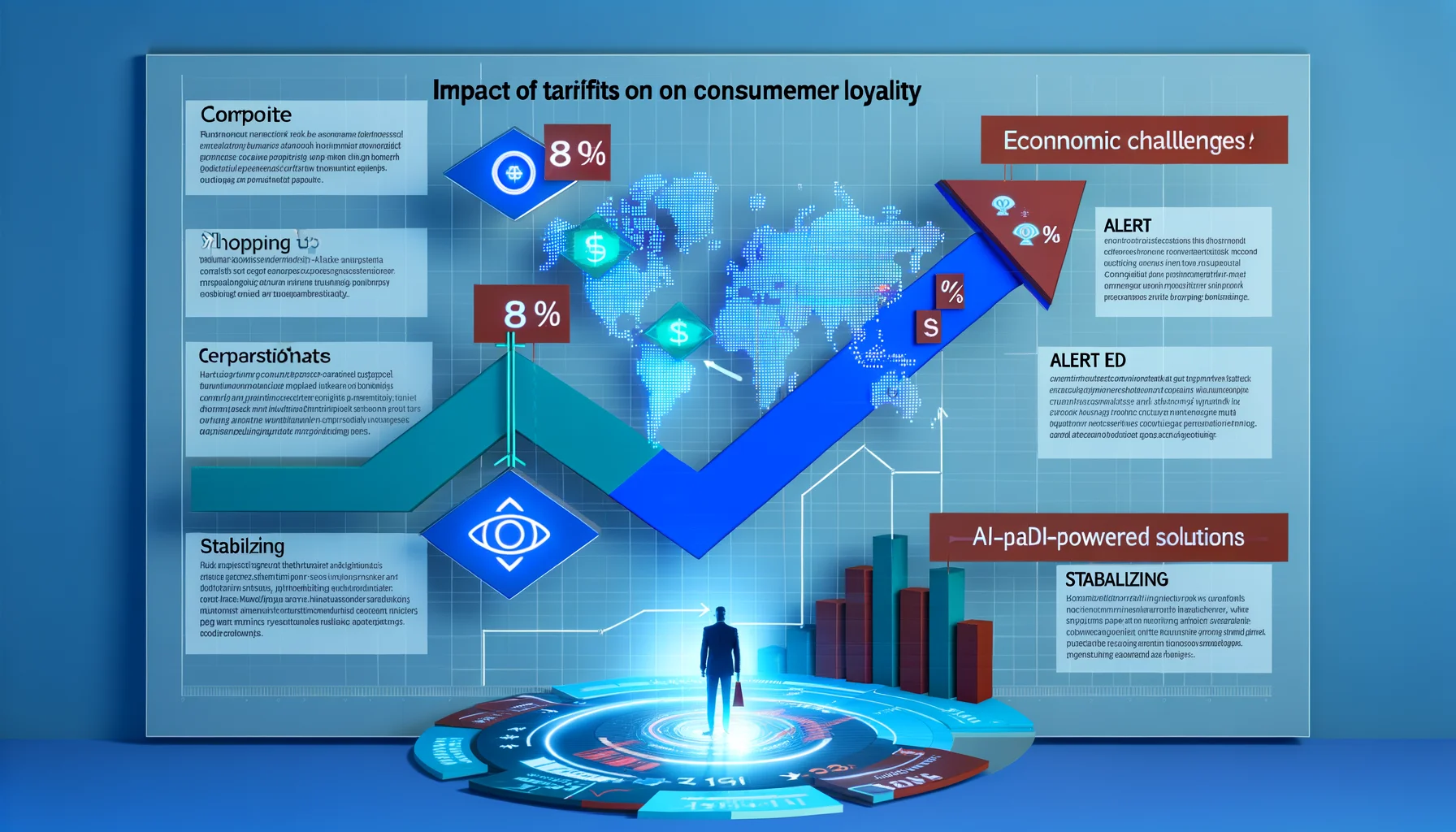
The proposed tariff implementations for 2025 represent more than policy changes—they're reshaping the fundamental relationship between brands and consumers. Recent consumer research reveals a stark reality: 73% of households are already adjusting their shopping patterns based on anticipated price increases, while 84% report they will prioritize essential purchases over discretionary spending in the coming year.
This isn't merely about customers becoming more price-sensitive; it's about a complete recalibration of what drives purchase decisions. When a 20% tariff on consumer goods translates to immediate sticker shock, even loyal customers begin questioning their brand allegiances. The challenge for retailers is maintaining customer relationships while navigating these new economic realities.
The Loyalty Vulnerability: Why Traditional Programs Fail in Economic Uncertainty
Most loyalty programs were designed for stable economic conditions where customers had discretionary income to spend on preferred brands. The 2025 tariff environment exposes critical vulnerabilities in these traditional approaches:
- Static Value Propositions: Point-based systems that don't adapt to changing customer financial situations become irrelevant when budgets tighten
- Purchase-Only Focus: Programs that reward spending fail when customers reduce overall purchase frequency due to economic constraints
- One-Size-Fits-All Rewards: Generic offers miss the mark when different customer segments respond differently to economic pressure
- Delayed Gratification Models: Long-term rewards lose appeal when customers need immediate value to justify purchases
- Limited Flexibility: Rigid program structures can't pivot quickly enough to address rapidly changing economic conditions
The result? A recent analysis shows that 42% of consumers have abandoned at least one loyalty program in the past year due to insufficient value during economic uncertainty, while 58% report feeling disconnected from brands that don't acknowledge their changing financial priorities.
Consumer Behavior Shifts: The New Purchase Psychology
The tariff environment is creating distinct behavioral patterns that forward-thinking retailers must understand and address:
Value-First Decision Making
Consumers are developing sophisticated value calculation frameworks. They're not just comparing prices—they're evaluating total cost of ownership, durability, multi-use functionality, and long-term savings potential. Research indicates 68% of consumers now spend more time researching purchases, with particular attention to reviews mentioning product longevity and versatility.
Postponement and Substitution Strategies
Customers are becoming strategic about timing and alternatives. 51% report delaying non-essential purchases until they can find better deals, while 63% actively seek substitute products from domestic or non-tariffed sources. This behavior extends the purchase consideration period and increases the importance of staying top-of-mind during longer decision cycles.
Community and Social Validation
Economic pressure is driving increased reliance on social proof and community recommendations. 74% of consumers report trusting peer recommendations more than brand advertising during uncertain times, while 82% seek validation from online communities before making significant purchases. This shift makes community-building and social features increasingly valuable in loyalty programs.
AI-Powered Adaptation: The New Loyalty Imperative
Successful loyalty programs in the tariff era require unprecedented levels of personalization and responsiveness. This is where artificial intelligence transforms from a competitive advantage to an essential capability. AI-powered loyalty platforms can analyze and respond to individual customer behavior changes in real-time, adapting program mechanics to maintain engagement even as circumstances evolve.
Predictive Financial Stress Recognition
Advanced AI systems can identify early indicators of customer financial stress through behavioral pattern analysis—decreased purchase frequency, shift to lower-priced items, longer consideration periods, or increased price comparison activity. Exchange Solutions' AI research capabilities enable proactive program adjustments before customers disengage, offering appropriate support and alternatives when they need them most.
Dynamic Value Optimization
Rather than static point values, AI-driven systems can optimize reward structures based on individual customer situations and market conditions. When tariffs increase product costs, the system can automatically adjust point redemption values, offer alternative reward categories, or provide access to domestic alternatives that maintain customer satisfaction without compromising margins.
Engagement Beyond Transactions
When purchase frequency decreases, AI can identify alternative engagement opportunities that maintain customer relationships. This might include educational content about product care and longevity, community features that provide social value, or experiential rewards that don't require immediate purchase but reinforce brand connection.
Strategic Implementation: Building Recession-Resilient Loyalty Programs
Creating loyalty programs that thrive during economic uncertainty requires strategic design principles that prioritize flexibility, immediate value, and customer support:
Immediate Gratification Architecture
- Implement instant rewards for small actions—reviews, social shares, educational content consumption
- Offer immediate discounts or perks rather than delayed rewards when customers need financial relief
- Create micro-reward systems that provide frequent positive reinforcement without requiring large purchases
Flexible Redemption Systems
- Allow points to be used for partial payments, reducing the barrier to purchase during budget constraints
- Implement dynamic pricing for rewards based on customer financial indicators and market conditions
- Offer non-purchase redemption options like exclusive access, educational content, or community features
Value-Added Services Integration
- Provide financial planning tools or budget calculators that help customers make informed decisions
- Offer extended warranties, care guides, or repair services that increase product longevity
- Create price tracking and alert systems that help customers optimize their purchase timing
The Exchange Solutions Advantage: AI-Driven Economic Resilience
Exchange Solutions' platform is uniquely positioned to help retailers navigate the 2025 tariff environment through sophisticated AI capabilities that transform challenges into opportunities:
ES Loyalty: Intelligent Adaptation Engine
Our core loyalty platform uses machine learning to continuously analyze customer behavior, economic indicators, and market conditions, automatically adjusting program mechanics to maintain engagement. When customers show signs of financial stress, the system can shift their experience toward value-focused rewards, extended payment options, or alternative engagement activities that don't require immediate purchase.
ES Loyalty Boost: Economic Performance Optimization
The advanced analytics capabilities identify which customers are most at risk during economic uncertainty and automatically deploy retention strategies tailored to their specific situations. This includes predictive modeling that anticipates customer needs before they explicitly express them, enabling proactive support that strengthens relationships during challenging times.
ES Engage: Community-Driven Value Creation
When traditional purchase-based engagement decreases, our engagement platform facilitates community building, peer support, and social validation that maintains brand connection without requiring transactions. This is particularly valuable during economic uncertainty when customers seek reassurance and shared experiences with others facing similar challenges.
Competitive Differentiation Through Crisis Leadership
Economic uncertainty creates opportunities for brands to demonstrate leadership and build deeper customer relationships. Companies that proactively address customer challenges rather than simply pushing sales will emerge stronger when economic conditions improve.
This approach requires several key shifts in loyalty program strategy:
- From Promotion to Partnership: Position the loyalty program as a tool that helps customers navigate economic challenges rather than simply rewarding purchases
- From Standardization to Personalization: Use AI to create individualized experiences that acknowledge each customer's unique financial situation and preferences
- From Transaction Focus to Relationship Building: Develop engagement strategies that create value beyond purchases, building emotional connections that survive economic downturns
- From Reactive to Proactive: Anticipate customer needs and challenges, offering solutions before customers have to ask for them
Implementation Roadmap: Preparing for Economic Headwinds
Successfully adapting loyalty programs for the 2025 tariff environment requires a structured approach:
Phase 1: Assessment and Planning (Immediate - 30 days)
- Conduct comprehensive customer segmentation analysis to identify vulnerability levels
- Audit existing program mechanics for economic resilience
- Develop scenario planning for different tariff implementation schedules and intensities
Phase 2: System Enhancement (30-90 days)
- Implement AI-driven behavioral monitoring and response systems
- Develop flexible reward structures that can adapt to changing conditions
- Create alternative engagement pathways that don't require purchases
Phase 3: Proactive Deployment (90+ days)
- Launch predictive customer support initiatives
- Deploy community and social features that provide non-transactional value
- Implement continuous optimization based on real-world performance data
Measuring Success in Uncertain Times
Traditional loyalty program metrics may not fully capture success during economic uncertainty. Programs need to track new indicators that reflect customer relationship health rather than just transaction volume:
- Customer Financial Health Indicators: Track changes in purchase patterns that suggest financial stress and measure program effectiveness in maintaining engagement during difficult periods
- Relationship Depth Metrics: Monitor non-transactional engagement like community participation, content consumption, and social sharing to gauge emotional connection strength
- Recovery Velocity: Measure how quickly customers return to normal purchasing patterns as their financial situations improve
- Advocacy and Referral Activity: Track customer willingness to recommend the brand during economic uncertainty as an indicator of true loyalty strength
The Strategic Imperative: Act Now, Lead Tomorrow
The 2025 tariff environment isn't a distant threat—it's an immediate reality that's already influencing consumer behavior and business decisions. Retailers who proactively adapt their loyalty programs will not only survive the economic uncertainty but emerge as market leaders when conditions stabilize.
The choice is clear: continue with static, transaction-focused programs that become irrelevant during economic stress, or embrace AI-powered, customer-centric approaches that strengthen relationships regardless of external conditions.
Key Takeaway
"Economic uncertainty doesn't destroy customer loyalty—it reveals which relationships are built on genuine value versus transactional convenience. AI-powered loyalty programs create the personalization and responsiveness necessary to maintain authentic connections during challenging times."
— Exchange Solutions Strategic Analysis Team
The retailers who thrive in the post-2025 tariff landscape will be those who used this period of uncertainty to build deeper, more meaningful customer relationships. Exchange Solutions provides the AI-powered platform capabilities necessary to transform economic challenges into competitive advantages, ensuring your loyalty program remains relevant, valuable, and effective regardless of external economic pressures.
Explore More From Exchange Solutions
- Playing to Win: How Gamification Is Reshaping Loyalty Engagement
- The Future of Loyalty: Top 10 Predictions Reshaping the Market
- Navigating the Loyalty Landscape: Top 12 Focus Areas for Marketers
- ES Loyalty: AI-Powered Customer Intelligence
- ES Loyalty Boost: Advanced Analytics for Economic Resilience
- ES Engage: Community-Driven Customer Relationships
- Loyalty & Economic Strategy Resources Hub
Exchange Solutions
September 12, 2025 • 8 min read