
Unlock a data-driven framework to accurately measure the financial impact of your loyalty initiative and build a compelling business case for stakeholders.
Executive Summary
Loyalty programs are a $360 billion global market growing at 8% CAGR. However, 65% of brands struggle to demonstrate the ROI of their loyalty initiatives. This guide provides a step-by-step framework to accurately measure the financial impact of your loyalty program and build a compelling business case for stakeholders. Key insights include:
The Evolving Loyalty Landscape
Loyalty programs have become a strategic imperative for brands across industries. The global loyalty management market is projected to grow from $8.9 billion in 2020 to $16.5 billion by 2025, at a CAGR of 13.1%.1 However, the landscape is rapidly evolving, with increased competition and heightened consumer expectations.
Emerging trends in the loyalty space include personalized experiences, mobile-first engagement, and integration with broader digital ecosystems. 80% of consumers are more likely to do business with a company that offers personalized experiences,2 and 60% want loyalty programs that integrate with their digital lives.3
At the same time, regulatory scrutiny on data privacy and responsible AI is increasing, requiring loyalty programs to adopt transparent and ethical practices. Brands that can effectively measure and communicate the financial impact of their loyalty initiatives will be well-positioned to navigate this evolving landscape and demonstrate value to key stakeholders.
Proving the ROI of Your Loyalty Program
Quantifying the return on investment (ROI) of a loyalty program can be a complex and daunting task, but it's a critical step in securing executive buy-in and ongoing funding. By following a structured framework, you can accurately measure the financial impact of your loyalty initiative and build a compelling business case.
Step 1: Define Your Loyalty Program Goals
The first step in measuring ROI is to clearly define the goals of your loyalty program. Are you focused on increasing customer lifetime value? Driving incremental revenue? Improving brand loyalty and advocacy? Establishing a clear set of objectives will help you identify the right metrics to track and analyze.
For example, if your primary goal is to increase customer lifetime value, you'll want to measure metrics like repeat purchase rate, average order value, and customer churn. If your focus is on driving incremental revenue, you'll need to track the impact of your loyalty program on sales, average basket size, and new customer acquisition.
Step 2: Establish a Baseline
Before implementing your loyalty program or making changes to an existing one, it's crucial to establish a baseline of key performance indicators (KPIs). This will allow you to measure the incremental impact of your loyalty initiative and demonstrate its true financial value.
Collect data on your current customer behavior, such as purchase frequency, average order value, and customer lifetime value. This baseline data will serve as a point of comparison to evaluate the effectiveness of your loyalty program over time.
Step 3: Design and Implement Your Loyalty Program
With your goals and baseline data established, you can now design and implement your loyalty program. This phase should include:
- Program structure: Determine the type of loyalty program (points, tiers, etc.), reward mechanics, and redemption options that align with your business objectives.
- Data integration: Ensure that your loyalty program is fully integrated with your customer data, allowing you to capture rich insights and measure performance.
- Personalization and engagement: Leverage AI and machine learning to deliver personalized experiences and increase member engagement.
Step 4: Track and Analyze Performance
Once your loyalty program is up and running, it's time to track and analyze its performance. Regularly monitor the key metrics you identified in Step 1, comparing them to your established baseline. This will allow you to quantify the financial impact of your loyalty initiative and identify areas for optimization.
Some essential metrics to track include:
- Customer lifetime value (CLV): The total revenue a customer is expected to generate during their relationship with your brand.
- Repeat purchase rate: The percentage of customers who make multiple purchases within a given time frame.
- Average order value (AOV): The average amount a customer spends per transaction.
- Incremental revenue: The additional revenue generated directly attributable to your loyalty program.
- Return on Ad Spend (ROAS): The revenue generated for every dollar spent on loyalty program marketing and promotions.
By regularly analyzing these metrics, you'll be able to identify the key drivers of your loyalty program's financial impact and make informed decisions to optimize its performance.
Step 5: Build a Compelling Business Case
The final step in proving the ROI of your loyalty program is to present your findings to key stakeholders in a clear and compelling manner. Your business case should include:
- Executive summary: A concise overview of your loyalty program's key achievements and financial impact.
- Baseline and performance metrics: Detailed data on your program's performance, including comparisons to your established baseline.
- Return on investment: A calculation of the financial return generated by your loyalty program, expressed as a clear ROI percentage.
- Recommendations and future plans: Proposed actions to further optimize your loyalty program and unlock additional value.
By presenting a well-structured, data-driven business case, you'll be able to secure ongoing support and investment for your loyalty program, ensuring its long-term success.
Leveraging Technology to Maximize Loyalty ROI
To effectively measure and communicate the ROI of your loyalty program, it's essential to leverage the right technology and data capabilities. Look for a loyalty solution that provides:
- Unified customer data: The ability to capture and unify customer data from multiple touch points, creating a 360-degree view of your members.
- AI-powered personalization: Advanced analytics and machine learning to deliver hyper-personalized experiences and predict customer behavior.
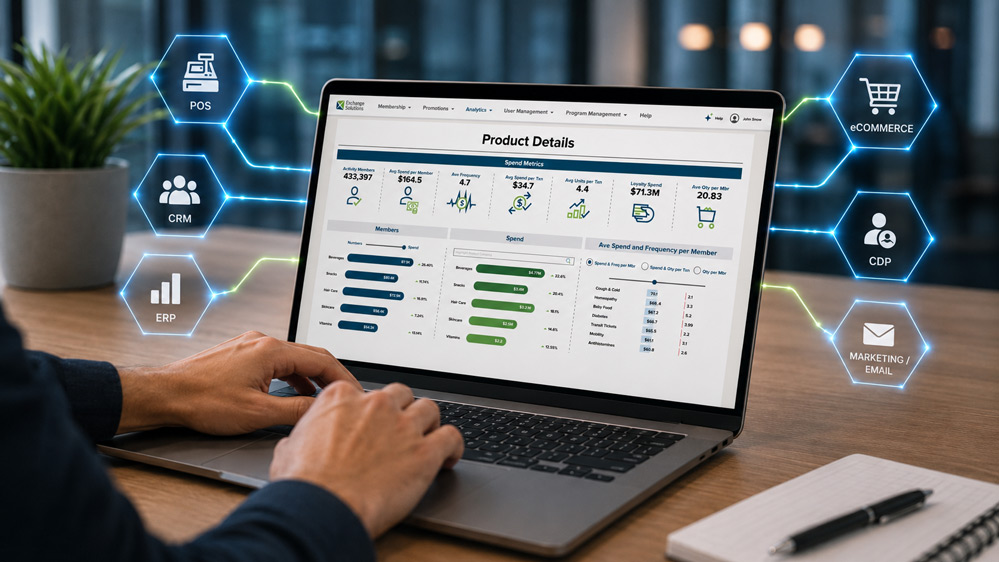
- Robust reporting and analytics: Comprehensive dashboards and tools to track loyalty program performance and ROI in real-time.
- Flexible integration: Seamless integration with your broader marketing and customer experience technology stack.
By leveraging a data-driven, AI-powered loyalty platform, you'll be able to accurately measure the financial impact of your program and present a compelling business case to stakeholders. This will not only help secure ongoing support but also enable you to continually optimize and enhance your loyalty initiatives for maximum return.
Loyalty Program Success Stories
To illustrate the power of a data-driven approach to loyalty, let's explore a few real-world success stories:
Starbucks Rewards: Driving Incremental Revenue
Starbucks' loyalty program, Starbucks Rewards, has been a resounding success, with over 24 million active members. By leveraging customer data and personalized offers, the program has been able to drive a 2-4% increase in incremental revenue for the company.4
The program's success can be attributed to its seamless integration with the Starbucks mobile app, which allows the company to track customer behavior and deliver personalized rewards and offers. By measuring the incremental revenue generated by Starbucks Rewards, the company has been able to demonstrate the program's substantial financial impact and secure ongoing investment.
Sephora Beauty Insider: Increasing Customer Lifetime Value
Sephora's Beauty Insider program is another shining example of a data-driven loyalty initiative. With over 25 million members, the program has been instrumental in driving customer lifetime value for the brand.
By analyzing customer data and behavior, Sephora has been able to tailor its rewards and experiences to each member, leading to a 30% higher customer lifetime value for Beauty Insider members compared to non-members.5 This data-driven approach has not only increased customer engagement but also provided Sephora with a clear, measurable ROI to justify ongoing investments in the program.
Unlocking the Full Potential of Your Loyalty Program
In today's competitive landscape, the ability to accurately measure and communicate the financial impact of your loyalty program is crucial for securing ongoing support and investment. By following the step-by-step framework outlined in this guide, you can unlock the full potential of your loyalty initiatives and position your brand for long-term success.
Remember, the key to proving loyalty ROI lies in defining clear objectives, establishing a baseline, leveraging data-driven insights, and presenting a compelling business case to stakeholders. With the right technology and a strategic, data-driven approach, you can transform your loyalty program into a powerful driver of customer engagement, revenue growth, and long-term brand loyalty.
Ready to take your loyalty program to the next level? Connect with Exchange Solutions today to learn how our AI-powered, data-driven loyalty platform can help you accurately measure and maximize the ROI of your loyalty initiatives.
Sources & References
- MarketsandMarkets - Loyalty Management Market - 2021 - Global loyalty management market size and growth forecast
- McKinsey - The Future of Loyalty Programs - 2020 - Insights on consumer preferences for personalized loyalty experiences
- Forrester - The Forrester Wave™: Loyalty Solutions, Q4 2021 - 2021 - Report on the evolving loyalty technology landscape
- Forbes - Starbucks Loyalty Program Is Driving Big Sales Growth, CEO Says - 2021 - Article on the financial impact of Starbucks Rewards
- Forbes - Sephora's Beauty Insider Program Is Its Biggest Asset - 2021 - Article on the value of Sephora's loyalty program
Tools Insights
Explore data-driven strategies for loyalty and customer engagement

Prove the ROI of Your Loyalty Program: A Step-by-Step Playbook
Unlock a data-driven framework to accurately measure the financial impact of your loyalty initiative and build a compelling business case for stakeholders.

Reducing Promo Spend Through Loyalty
Retailers spent the past few years leaning on promotions to keep value-seeking shoppers engaged. But blanket discounts are expensive, train customers to wait for deals, and often fail to generate incremental demand. Loyalty offers a way out: by moving dollars from mass markdowns to member-targeted value, retailers can protect margin while still delivering relevance and savings.

TEST: Delete and Restore Functionality Test Article
This is a test article created to verify delete and restore functionality in the CMS. Feel free to delete this to test the recycle bin feature.
Ready to Transform Your Loyalty Strategy?
See how Exchange Solutions helps all industries optimize loyalty programs with proven strategies.