
Digital coupons are no longer just discounts—they are becoming persistent, personalized touch points that connect price, identity and experience. By pairing universal coupons and mobile wallets with loyalty data and rigorous measurement, retailers can deliver value shoppers feel while protecting margin and learning faster.
Digital Coupons 2.0: How mobile-based offers are evolving into personalized loyalty touch points
Introduction — why this matters now
Shoppers remain intensely price sensitive, and mobile usage keeps rising, making digital coupons one of the clearest paths to value and engagement. Pew Research reports that 90% of U.S. adults have a smartphone (Jan. 2024)[1], which means mobile offers can reliably reach most shoppers. Meanwhile, Google shifted course on third-party cookie deprecation in 2025[2], but the signal has already pushed marketers toward owned, consented data and loyalty-driven personalization. Retailers are also upgrading their value propositions: Target revamped Target Circle in 2024 with options spanning free and paid tiers[3]. And after a decade-long decline, coupon use has been ticking up again since 2022[4], with mid-2024 data showing hundreds of millions of redemptions in the first half of the year.
Trend 1 — From clip-and-save to identity-linked, personalized offers
The center of gravity has moved from anonymous, paper coupons to identity-linked, digital offers inside retailer apps, websites, or wallets. Load-to-card (L2C) coupons passed newspaper inserts for the first time in 2020 and have continued to grow since then[5]. Today, mobile coupons act as a personalized shelf tag: retailers target known members with relevant savings, triggered by real purchase behavior and context (basket, store, time). The strategic benefit is two-fold: targeted savings protect margin while the program collects first-party data that can be reused across loyalty, CRM and retail media.
Trend 2 — Universal (8112) digital coupons enable serialized, one-time use across retailers
A major unlock is the 8112 Universal Digital Coupon standard[6]. Rather than relying on static barcodes, 8112 coupons are serialized and validated in real time at the point of sale. That reduces fraud, supports SKU-level targeting, and lets manufacturers distribute a single offer redeemable across participating retailers. The operational payoff: cleaner settlement, better visibility into redemptions, and the ability to cap, test and learn without the risks of broad, paper distribution.
Trend 3 — Mobile wallets turn offers into persistent, updateable loyalty touch points
Retailers increasingly issue offers (and even membership IDs) as Apple Wallet or Google Wallet passes[7][8]. Unlike one-off emails, a wallet pass persists on the device and can be updated server-side —for example, refreshing an expiring coupon, adding store-specific perks, or notifying members as they approach a location. The effect is an "always-on" loyalty surface that works even without a full-featured app, and that can nudge customers with timely, contextual value.
Trend 4 — First-party data and retail media raise the bar for measurement
Even with Google's 2025 decision to keep third-party cookies, the direction of travel is clear: retailers are prioritizing owned channels and first-party data capture. Loyalty-connected coupons are a prime mechanism—trading savings for consent and behavioral signals that power analytics and retail media activation. Studies have long linked strong personalization to revenue lift[9], and newer work highlights how AI and gen AI are enabling scaled, more precise experiences without relying on blunt, site-wide promos[10].
Trend 5 — Accessibility, trust and operations matter as much as targeting
As more offers move into apps and mobile wallets, accessibility and clarity remain table stakes. Some grocers are adding in-store kiosks so shoppers without smartphones can still access digital-only deals[11], reinforcing equity while keeping the savings experience simple. Retailers also need clear offer taxonomy and guardrails at the POS (e.g., one-time use, stacking logic, substitution rules) to avoid frustration. Finally, loyalty teams should monitor redemption accuracy and publish plain-language policies to maintain trust.
What this means for retail marketers
- Unify your offer architecture: Define how base promotions, loyalty offers, universal (8112) coupons and card-linked cash-back coexist. Make the rules explicit so customers and associates get consistent outcomes.
- Make mobile the primary surface, not the only surface: Publish to app, web, and wallets, and provide on-site access (receipts, kiosks) so value is equitable.
- Treat coupons as a data product: Capture consent, link identity, and feed your CDP and retail media measurement. Use progressive profiling (e.g., category interests) in exchange for richer value.
- Build for incrementality: Use control groups and geotests to measure true lift versus subsidized purchases. Tie attribution to loyalty IDs, wallet pass usage, and POS events.
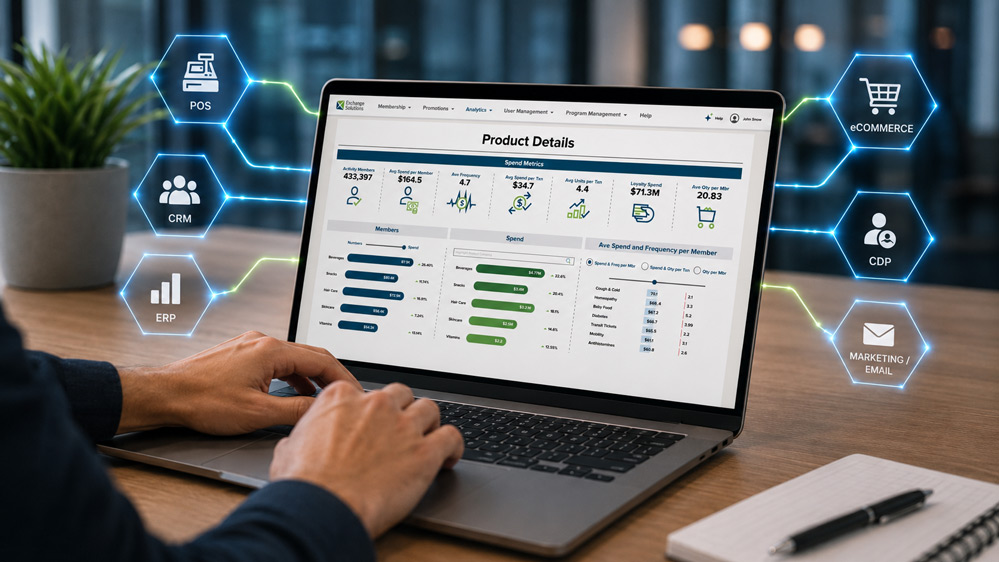
- Modernize the stack: Ensure POS can validate 8112 and support real-time status checks. Integrate loyalty, ecommerce, and offer engines through your CDP/CRM. Modular loyalty platforms (for example, Exchange Solutions) are one option retailers use to test into this capability without overhauling the entire stack.
- Design for operations: Document coupon policies in plain language, train associates on digital redemptions, and stand up a process to resolve misapplied offers quickly.
🎯 Key Takeaway
Digital coupons are no longer just discounts—they are becoming persistent, personalized touch points that connect price, identity and experience. By pairing universal coupons and mobile wallets with loyalty data and rigorous measurement, retailers can deliver value shoppers feel while protecting margin and learning faster.